

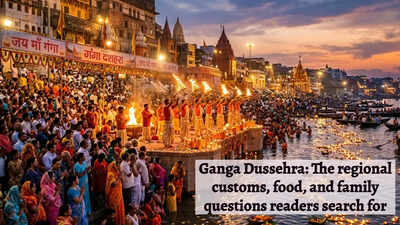
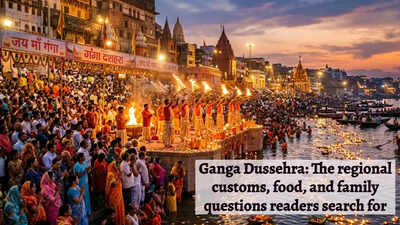
At many North Indian homes, Ganga Dussehra begins before the house is fully awake. A steel lota, a small diya, a few marigolds, maybe some tulsi leaves, and that familiar family discussion begins at the dining table or on a WhatsApp call: are we doing snan, puja, daan, or all three, and if we’re nowhere near the Ganga, what counts? That’s the week this festival brings, part devotion, part memory, part practical decision.
Why this day carries unusual affection
Ganga Dussehra is not just another date in the Vaishakh to Jyeshtha stretch of the Hindu calendar. The festival marks the Gangavataran, or that is the time of descent for Maa Ganga down to earth. In a lot of homes, the celebration is marked by the same tenderness, but it is distinct from the splendor of larger celebrations for the public. People talk about Ganga not just as an actual river, but also as a mother as purifier, witness, and a path to release. This name in itself is frequently connected to dasha hara, which is the removal of ten sins. traditional explanations that refer to sins caused by kaya, vacha and manasa, which refers to body speech, mind, and body. This idea is what determines the general mood that is prevalent throughout the year. Yes, they take a bath, give flowers, light lamps and even give daan or a donation. But what happens inside is equally. Restraint, truthfulness, and gratitude are part of the observance too.That’s also why readers search for practical answers every year. Ganga Dussehra sits at the meeting point of scriptural memory and household custom. One family may insist on a river bath at dawn. Another may perform jalarpan, offering water, at the home shrine because they live far from any sacred river. Both are trying to honour the same mother.
Bhagiratha’s prayer still shapes the festival
The most popular story originates in the Puranic tradition. Sagara’s sons were slain to ashes and their souls were unable to be at peace. Their descendant Bhagiratha undertook severe tapas, or austerity, to bring the celestial Ganga down to earth so her waters could purify and liberate them. But Ganga’s force was too immense for the earth to bear. Lord Shiva received her in his jata, matted locks, softening the descent before releasing her in streams across the world.That story explains why Ganga Dussehra is never only about water. It is also about effort, grace, and mediation. Bhagiratha strives. Shiva steadies. Ganga blesses. In terms of ritual, it is a day of ritual bathing in sacred waters, snan memorials, smaran and daan. In terms of emotional significance it’s a day where families pay tribute to their ancestors, seek the cleansing of their bodies, and search for spiritual and physical peace. You can see this even in homes far from the river. Someone places a small kalash, a sanctified vessel, before an image of Ganga riding the makara, the mythical aquatic being. A third person sings Ganga Stotram, which is a song in praise of the god. Grandmothers teach children why even just a few drops of Gangajal or water from the Ganga is honored with respect.
What is it? North Indian homes actually observe it
Within Uttar Pradesh, Uttarakhand, Bihar, Delhi, and portions from Rajasthan and Haryana the general rhythm is well-known, although details may differ. If devotees are able to get to an ghat, river, (or temple tank), they take a bath early and make an arghya, an offering of water in reverence to Surya the sun. At Ganga ghats flower offerings and diyas are offered, as well as milk and prayers are given to the river itself.Many also give food, clothes, or cooling summer items such as earthen pots, hand fans, or water.At home, a simpler puja is common. The shrine is cleaned. A vessel of clean water is placed and invoked as Ganga, especially where Gangajal is available to mix into it. Devotees offer white flowers, akshata, unbroken rice, incense, lamp, and naivedya, food offering. Some chant “Om Shri Gangayai Namah,” a salutation to Goddess Ganga, 10 or 108 times. Some read from the Ganga Lahari or recite Vishnu and Shiva names alongside the Ganga prayer, which tells you something important about this festival: it isn’t sectarian in mood. Shaiva, Vaishnava, and Smarta homes all make room for it.Fasting also differs by family. Some keep a full vrat, a sacred fast, on fruit and milk. Many more choose a light satvik meal, food prepared without onion and garlic, and avoid anger, harsh speech, and waste. That last part is not decorative. A festival honouring a river asks for a certain moral consistency.
What changes from region to region
Readers often ask if “the proper way” is the same everywhere. It isn’t.In Varanasi, Prayagraj, Haridwar, Rishikesh, and other river cities, Ganga Dussehra is strongly tied to snan and darshan, sacred viewing of the deity or river. The public atmosphere is visible and collective. For smaller North Indian towns, the celebrations may be more local and centered around the family temple or a local visit.In certain families of the eastern region of Uttar Pradesh and Bihar, the emphasis is on daan, remembrances of the pitrs, ancestors and pitrs as well as the worship of the river. In parts of Delhi and western Uttar Pradesh, people may combine the day with a practical household puja and distribution of sharbat, a sweet cooling drink, because the heat of Jyeshtha is itself part of the season’s logic.Among the diaspora, adaptation is the real custom. If there’s no Ganga close by, the devotees make use of the water that is clean at home, which is often mixed with the occasional drop of preserved Gangajal that is brought from India. Many people visit local rivers or beach with reverence, not for a substitute in the strict sense of scripture or as a means to mark the day with genuine reverence. Temples in other countries may have an abhisheka or ritual bathing to an image of a murti or even a collective chant in the evening, when busy schedules make morning observance difficult.
What gets cooked, and what gets avoided
There is no one all-Indian Ganga Dussehra menu, and that can be a shock to people. This isn’t a holiday with a dish that everyone is familiar with in the same way that Janmashtami as well as Ganesh Chaturthi typically have signature menus.Still, certain patterns appear. Many families keep the food cooling, simple, and satvik. Kheer, a sweet rice pudding is very popular. Also, the seasonal fruits, soaked gram mishri, sugar rock cucumber, curd and lighter dishes designed for a first offering and eating later. Some homes make poori and aloo without onion and garlic after the puja. Others avoid heavy fried food if they are fasting or if the day is centred on snan and temple visits.What’s offered to Ganga is usually modest and clean rather than elaborate. Flowers, fruits, milk in some traditions, and sweets are common. But one caution matters now more than ever: devotion should not become pollution. Plastic packets, synthetic cloth, foil, and non-biodegradable puja waste should never be thrown into a river.
The mistakes families ask about every year
The first mistake is arguing over date without checking a local panchang, a Hindu almanac, for your location. For 2026, Drik Panchang lists May 25 for New Delhi, but if you are abroad, sunrise and tithi alignment can shift observance.The second is thinking the festival “doesn’t count” if you cannot bathe in the Ganga. It does. Traditional practice gives pride of place to Ganga snan, but home worship with shraddha, sincere devotion, is widely accepted when travel is not possible.The third is treating the day as a quick ritual purchase. Ganga Dussehra is not improved by excess. You do not need a large setup. A clean space, water, prayer, and charity done with humility are enough.The fourth is forgetting the ethical side. If the day is about cleansing, then truthfulness, restraint in speech, and care toward water sources belong to the observance.
Short answers readers keep searching for
Can you celebrate Ganga Dussehra at home? Yes. Keep the water in a fresh kalash and add Gangajal if already have it, and then offer floral arrangements and diya. Then, chant the Ganga prayer, then then offer any type of daan. Is fasting compulsory? No. Many keep a vrat, but many others observe with a light satvik meal.What if you live outside India? Follow your local panchang first. If temple timings or work make morning worship hard, a sincere puja later in the day is still meaningful.Do you need Gangajal? It helps, but it is not mandatory for the observance itself. Clean water invoked with devotion is used in many homes.What kind of charity suits the day? Food, water, clothing fan, pots made of earth or assistance to those in need match the spirit of the festival. If your family is a bit different, follow it. individual style, follow your family’s timetable. And if you’re starting fresh this year, begin small, with a vessel of water catching the morning light, and one quiet prayer to the river mother whose story still flows through so many Indian homes.