



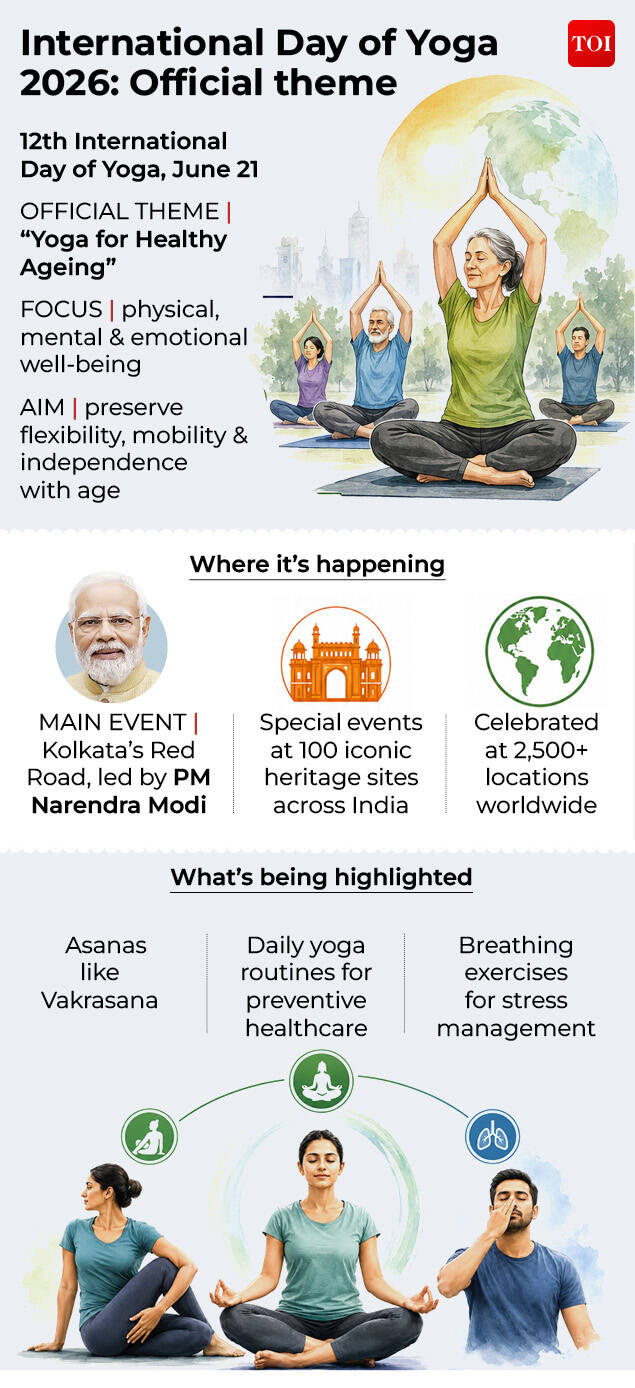
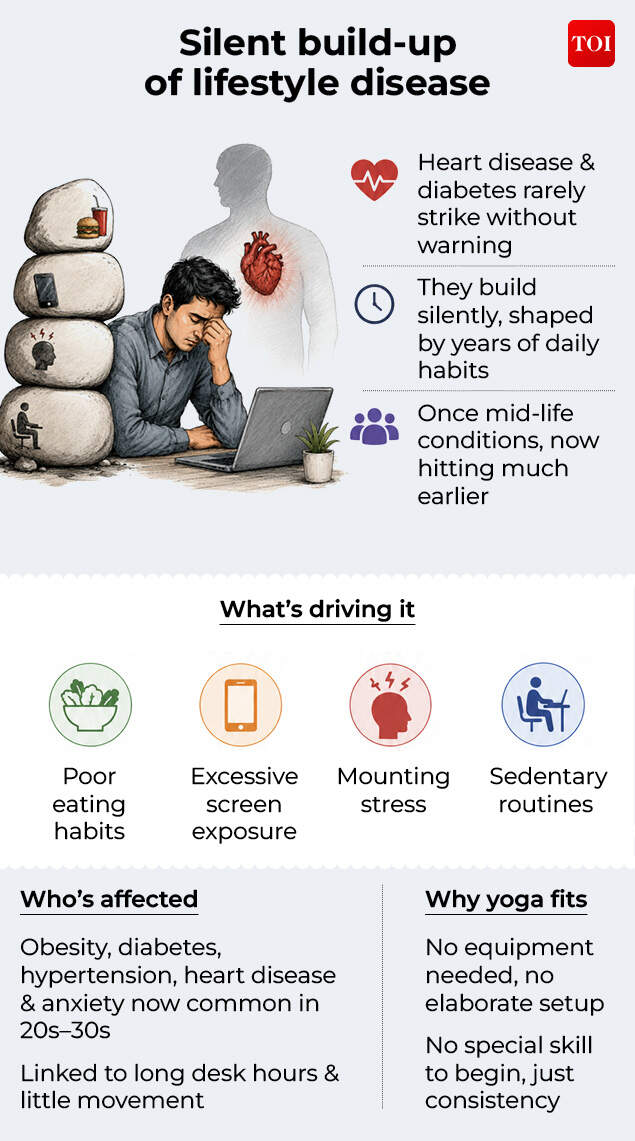
Can a daily routine of stretching, breathing and stillness change how the body ages?A growing body of medical opinion suggests it can.This year, the International Day of Yoga, marked globally on June 21, carries the theme ‘Healthy Ageing’. It is a nod to mounting evidence that the habits people build today around movement, stress and rest quietly determine how well they age decades later.Healthy ageing: the 2026 themeConditions like heart disease and diabetes rarely strike without warning. They build up silently over years, often shaped by everyday choices around activity, rest and stress management.Yet doctors note that lifestyle diseases that once arrived in middle age are now showing up far earlier. A combination of poor eating habits, excessive screen exposure, mounting stress and sedentary routines is affecting people well before they reach their 40s. Obesity, diabetes, hypertension, heart disease and anxiety are increasingly common among those still in their 20s and 30s, many of whom spend long hours at desks with little physical movement.It is precisely in this context that yoga has found renewed relevance. It requires no equipment, no elaborate setup and no special skill to begin. Only consistency and a willingness to make time for it.
INTERNATIONAL DAY OF YOGA 2026
Part of its value lies in how it interacts with the body’s hormonal system. Persistent stress drives up cortisol levels, which in turn can trigger insulin resistance, weight gain, thyroid imbalance and broader metabolic disruption. Research indicates that yoga can lower cortisol levels by 20–30%, helping to stabilize blood sugar and improve the body’s sensitivity to insulin. For people living with diabetes, consistent practice has been linked to measurable improvement in long-term blood sugar markers such as HbA1c (Hemoglobin A1C).A study titled ‘Exploring The Intersection Of Yoga And Modern Science,’ published in the African Journal of Biomedical Research, examined how yoga aligns with contemporary scientific understanding of wellness, concluding that the practice offers practical guidance for improving both physical and mental health. The study’s author called for further research into methodological gaps and yoga’s long-term role within formal healthcare settings.“Yoga can definitely support health ageing by preserving the flexibility, balance, muscle strength, and joint mobility which are essential for independence in the early life,” said Bangalore’s SPARSH Hospital consultant Dr Shreevathsa Upadhyaya. “Regular practice of yoga helps to improve posture, and even reduce fall risk. The meditative element of yoga even supports sleep and control stress as well. When yoga is combined with a healthy diet then it becomes very gentle and even improve quality of life.”Conditions yoga can help manageAs lifestyle-related illnesses become more widespread, several of the most common ones appear to respond positively to a sustained yoga practice.Asked which conditions benefit most, Dr Upadhyaya said: “Regular yoga can provide a great level of benefit to people with lifestyle related conditions such as hypertension, obesity, chronic back pain, anxiety, sleep related problems, and stress related disorders as well. It also supports circulation, flexibility, control of weight, and relaxation. Many patients report that even after consistent level of practice, they feel less stiff, manage pain in a calm way, and become more disciplined along with food and medicines.”He was careful to draw a boundary around what yoga can and cannot do. “However, yoga should be considered as the supportive therapy, not as a replacement of prescribed medical treatment or regular medical follow ups,” he said.That distinction is echoed by practitioners working directly with patients. Amrita Pritam, a yoga instructor at Bhrahma Darshan Yoga, said she has worked with students managing cervical pain and diabetes. One of her students dealing with cervical pain said, “Yoga has given me some relief from the ache.”
SILENT BUILD-UP OF LIFESTYLE DISEASE
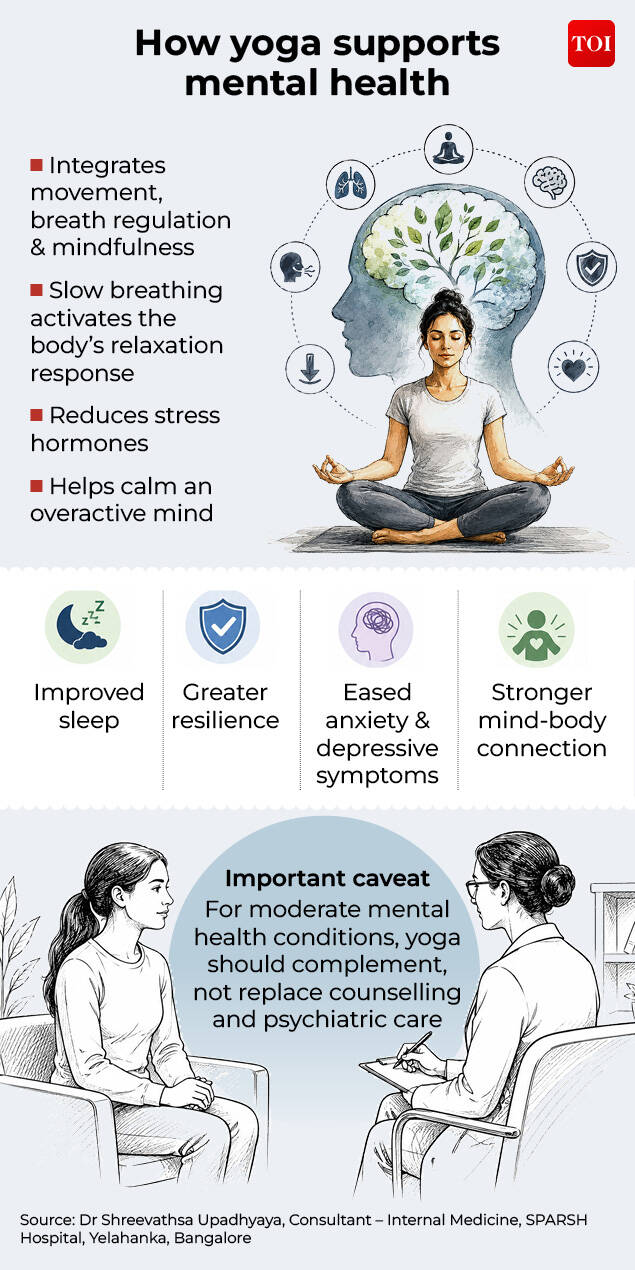
Describing how she structures sessions for such cases, Amrita said: “For people with cervical pain we start with a warm up. Cat and cow pose, bhujangasana, setu bandhansana. You can also do the twelve postures of the surya namaskar.”Even as evidence builds around yoga’s genuine benefits, there is caution against the inflated claims that have come to surround it commercially. Much of the skepticism directed at yoga, stems not from the practice itself but from how it is marketed. Claims that particular poses can “flush toxins” from organs like the liver, that yoga can cure chronic disease outright or that it alters cellular biology are not supported by evidence. There is also push back on framing that positions yoga as categorically superior to other forms of exercise such as strength or cardiovascular training, rather than as one effective option among several.Mental health contextYoga’s reach extends beyond the physical, with doctors increasingly pointing to its role in supporting mental wellbeing.Asked whether yoga can meaningfully improve mental health, Dr Upadhyaya said: “Yes, yoga can support the mental health in an efficient way since it integrates movement, regulation of breath and mindfulness. Slow breathing activates that relaxation response, reduce amount of stress hormones and help calm an overactive mind. Regular practice helps to improve sleep, resilience and even assist with anxiety or any another depressive symptoms so that they feel more grounded and well connected with their body. However in moderate mental conditions, yoga should definitely complement counselling and psychiatric care, not replace the professional help.”Breath-focused and relaxation-oriented yoga practices have also been linked to better sleep quality, helping practitioners fall asleep faster, sleep more deeply, and experience fewer disruptive awakenings that can otherwise compound mental health difficulties. Separately, trauma-informed approaches to yoga which emphasise body awareness and self-regulation, have shown promise in reducing hyperarousal and supporting emotional control when used alongside standard treatment for PTSD.Younger practitioners are not exempt from these benefits. Asked about yoga’s relevance for youth, Dr Upadhyaya said: “For the entire youth, yoga helps to build strength, flexibility, balance and better kind of posture at an age when long sitting and stress are very common. It also makes muscles and joint quite stable which ultimately reduce risk of sport injury. Yoga also teaches patients and focuses which can help students to manage the academic level of pressure, and emotional fatigue. Most significantly, it encourages healthy habits on early basis making fitness feel consistent and sustainable daily too.”
HOW YOGA SUPPORTS MENTAL HEALTH
Yoga as a global phenomenonThe roots of yoga stretch back nearly 5,000 years to Rishikesh, a city in Uttarakhand still recognised today as the Yoga Capital of the World. While its origins are deeply spiritual, the practice has long since transcended geography and culture to find followers worldwide.In recent years, this appeal has reshaped how people think about travel itself. Wellness tourism, with yoga at its centre, has become a significant draw for travellers as more people seek experiences centred on inner stillness rather than conventional sightseeing.At its core, the word “yoga” translates to “to join or unite,” reflecting the practice’s central aim of bringing together body and mind. That philosophy has helped it take root far beyond India, with practitioners now spread across the globe.In 2014, the United Nations formally recognised this widespread appeal by declaring June 21 the International Day of Yoga, with the broader goal of raising public awareness about the practice’s benefits. It is a mission that, this year, sharpens its focus on a single idea: ageing well.