

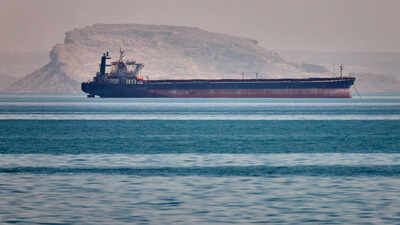
The Strait of Hormuz is showing signs of coming back to life after a tense spell due to Iran’s recent attacks on ships passing through the strategic corridor. Once heavily choked following US-Israel joint strikes on Iran on February 28, the waterway is now slowly regaining its rhythm, with more operators edging crude carriers back into the Persian Gulf.Kpler data cited by Bloomberg showed around 24 commodity vessels, including oil tankers, liquefied natural gas carriers and bulk ships, passed through the strait in both directions on Monday. This comes after traffic fell sharply after another container vessel faced strikes last Thursday.Tankers run by private operators accounted for most of the ships heading into the Persian Gulf.A Saudi Arabian-flagged supertanker also re-entered the Gulf after crossing the strait with its transponder turned off. Together, the vessels are capable of carrying up to 9 million barrels of crude, signalling growing confidence among shipowners to use the route again.The renewed movement follows US strikes on Iran carried out after the ship attacks, after which both sides agreed to halt hostilities ahead of planned peace talks this week. Shipowners, traders and investors have been watching closely for signs of tanker re-entry into the Gulf, which is critical for regional producers to restart output.Among the vessels entering the Persian Gulf were three supertankers operated by South Korea’s Sinokor, which travelled empty while indicating they were moving along Oman’s coastline. A Marshall Islands-flagged Suezmax tanker owned by a Greek operator also appeared inside the Gulf after previously broadcasting its position in the Gulf of Oman on June 27, suggesting it may have crossed without transmitting its location.The Nisalah, a very large crude carrier operated by Saudi Arabia’s National Shipping Company (Bahri), also completed an inbound transit, Bloomberg reported. The empty supertanker is now positioned off Ras Tanura, home to Saudi Arabia’s largest refinery.The revival comes after the transit stayed choked for over 100 days since the Middle East crisis erupted. On February 28, US and Israel launched joint strikes on Iran. In retaliation, the country tightened its noose on the crucial energy pipeline, squeezing supplies and rattling economic across the globe.