

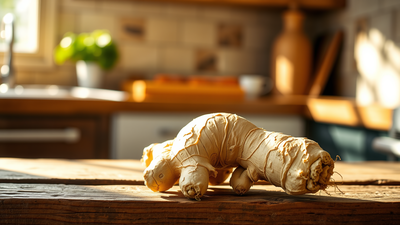
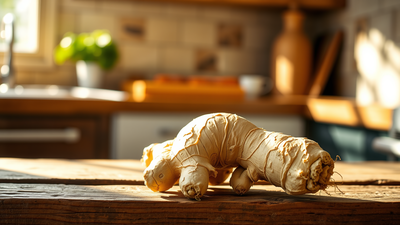
Ginger is one of those ingredients that finds its way into almost every Indian kitchen, from morning tea to curries and chutneys, yet it is also one of the quickest things to shrivel up, turn mouldy or lose its punch if left sitting around the wrong way. Part of the problem is simple biology, fresh ginger is a rhizome packed with enzymes that keep breaking down its starch and pectin even after it has been harvested, which is exactly why a piece that looked plump and juicy at the store can turn dry and fibrous within days if it is not stored properly. The good news is that keeping ginger fresh for weeks, or even months, does not require anything fancy, just a clear understanding of what actually damages it and a few small habits in the kitchen.
Why ginger spoils faster than most root vegetables
Unlike a potato or an onion, ginger is a living rhizome that continues to respire and lose moisture even after it has been dug up, and this ongoing biological activity is what eventually causes it to soften, wrinkle and eventually rot. According to Iowa State University Extension and Outreach, fresh ginger contains enzymes that continue breaking down its internal starch and pectin over time, which is why quality naturally declines the longer it sits around, regardless of how carefully it was picked at the store. This is also why buying only what you actually plan to use makes a real difference, since ginger is usually sold by weight rather than by the piece, it is easy to end up with far more than a typical recipe needs, and that surplus starts losing quality the moment it leaves the shop.
The best way to store ginger for everyday cooking
For ginger you plan to use within a few weeks, refrigeration is by far the simplest and most reliable option. According to guidance shared by experts at the University of Minnesota Extension, ginger root should be wrapped tightly in a paper towel or plastic wrap, or placed inside a plastic bag, and then kept in the refrigerator, where it will typically stay fresh for two to three weeks. The paper towel helps absorb any excess moisture that would otherwise encourage mould, while the wrap or bag prevents the root from drying out and turning fibrous, striking the right balance between keeping air out and letting the ginger breathe just enough. Ginger that has already been peeled can also be refrigerated this way, though it will not last quite as long as a piece left unpeeled, since removing the skin exposes more of the flesh to air and speeds up moisture loss.
When freezing makes more sense than the fridge
If you know you are not going to get through a piece of ginger within a few weeks, freezing is the better option and can extend its usable life dramatically. Whole, unpeeled ginger wrapped tightly and stored in a freezer safe bag or container will generally keep well for three to four months, and according to Iowa State University Extension, ginger that is kept constantly frozen at zero degrees Fahrenheit will actually remain safe to eat indefinitely, even if its texture and flavour gradually decline over very long periods. For quicker use later, many home cooks prefer to grate or finely chop the ginger first, then freeze it in small flat piles or in ice cube trays, since frozen ginger can be grated straight from frozen without needing to thaw, making it easy to add a small amount directly into a dish while cooking.
Storing ginger on the counter, and when it actually works
Refrigeration is not always necessary, particularly if you expect to use up a piece of ginger within just a couple of days. In that case, ginger can be left out at room temperature, ideally placed in a basket or on a plate rather than sealed inside a bag, so that air can circulate freely around it. Keeping it out of direct sunlight matters just as much as ventilation, since heat and light gradually break down the natural oils responsible for ginger’s aroma and flavour, meaning a piece left on a sunny countertop will dry out and lose its punch noticeably faster than one kept in a cool, shaded spot. This method works best as a short term solution rather than a long term one, since unrefrigerated ginger will still soften and eventually spoil faster than one kept properly chilled.
How to tell if your ginger has already gone bad
Even with the best storage habits, it helps to know the warning signs that a piece of ginger is no longer good to use. Fresh ginger should feel firm to the touch, so any softness or a mushy texture is usually the clearest sign that it has started to spoil. Wrinkled or shrivelled skin points to dehydration, while any visible mould, dark spots, or a dull, off putting smell in place of its usual sharp aroma are all reasons to discard it rather than try to salvage the piece. Cutting into a suspect piece can also help, since ginger that has turned an unusual dark yellow, grey or brownish colour on the inside has typically already begun to break down, even if the outside still looks reasonably intact.
A few extra ways to keep ginger going longer
Beyond the fridge and freezer, there are a handful of other methods worth knowing if you want ginger to last even longer or to add a bit of variety to how you use it. Preserving sliced ginger in vodka or another neutral spirit is a long standing trick, the alcohol acts as a natural preservative, and the ginger flavoured spirit that results can double up as a useful addition to marinades, stir fries and soups. Ginger can also be dried and ground into a powder that keeps well for up to a year, or pickled in vinegar for a tangy, long lasting condiment. Whichever method suits your kitchen best, the underlying principle stays the same, ginger keeps its flavour and texture longest when it is shielded from excess moisture, kept away from heat and light, and used within a timeframe that actually matches how it has been stored.