

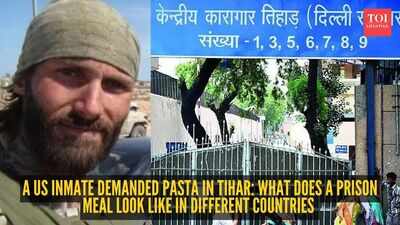
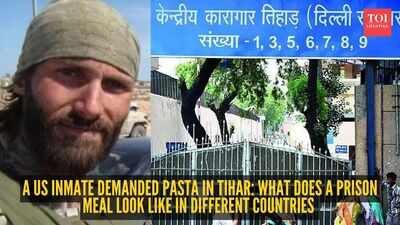
Sometimes real life is stranger than fiction, and one such recent incident has caught people’s attention. A US citizen arrested in a terror case has approached a Delhi court with an unusual request: Permission to cook his own food inside Tihar Jail, saying he has been unable to eat the meals served there and has remained on a hunger strike for more than 50 days (since May 6, 2026).The man, Matthew Aaron VanDyke, who is lodged in Tihar Jail after being arrested by the National Investigation Agency (NIA), has told the court that the prison food does not suit him. In his plea, he says he has not been able to consume the “spicy, oily, deep-fried and greasy” meals served in jail and that the situation has taken a serious toll on his health, as per reports.
What VanDyke is asking for
In his application before Additional Sessions Judge Prashant Sharma at Patiala House Court, VanDyke has asked for a kitchen-like arrangement in prison. He wants permission to keep food supplies and utensils at his own expense so that he can prepare meals that he can actually eat.His plea says he has been on a hunger strike since 6 May because the food ordinarily served in Indian prisons does not match his dietary habits as an American citizen. He claims the current arrangement has caused severe physical discomfort and has worsened his condition in custody.According to the petition, he has lost nearly 30 pounds, or about 14 kilograms. It also says he has developed vision problems due to inadequate nutrition and has suffered a major drop in strength, stamina and immunity.VanDyke’s lawyer has framed the request as a humanitarian one, arguing that it is meant only to protect his health while he remains in judicial custody. The plea also says his family is willing to pay for the food, the utensils and the cooking equipment.The court has asked Tihar Jail authorities for a response and listed the matter for hearing on 21 July.
What he wants to keep
The request is detailed. VanDyke has sought permission to store food items such as lentils, red meat, chicken, fish including shrimp, pasta, uncooked noodles, rice, potatoes, onions, beans, spices, bread, butter, olive oil, toned milk, soya milk and bottled water.He has also asked for an induction cooker, pots, bowls and even a plastic chopper so that he can prepare the food himself. In other words, he is not asking for outside meals to be delivered constantly. He wants the ability to cook within prison using his own ingredients.That is what makes the case stand out. It is not just about a special meal request. It is about whether a prisoner, on humanitarian grounds, should be allowed to create a personal cooking setup inside jail.
How Tihar jail food is usually served

As reported by The Times of India, prisoners in Tihar Jail are served food four times a day under prison rules:1. The day begins around 7 am with items such as bread and tea, biscuits, or poori-sabzi or khichdi depending on the menu. 2. Lunch comes at around 11 am and usually includes four rotis, dal and a seasonal vegetable.3. An evening snack is served between 3 pm and 3.30 pm and typically consists of tea and biscuits. 4. Dinner is generally served between 6 pm and 6.30 pm and again includes four rotis, dal and a seasonal vegetable. Prisoners can choose rice instead of rotis.That is a basic but structured menu, designed to feed a large prison population within a controlled system. VanDyke’s argument is that this standard diet has not worked for him personally.
Why the case has drawn attention
The petition has attracted interest because it touches on two very different ideas at once: Prison discipline and prisoner welfare. On one side is the need for a common system that works in a high-security facility. On the other is the question of whether someone can be denied food that he is physically able to eat.Prison meals are usually designed to be simple, predictable and cost-controlled. They are not meant to be customised for every individual. But cases like this test how far humanitarian exceptions can go.If the court allows the request, it could raise further questions about what kinds of food arrangements are acceptable in custody, who pays for them, and how prison security would be maintained around personal cooking equipment.
The arrest behind the plea

Picture credit: Matthew Aaron VanDyke’s Social Media handles and official website
VanDyke was arrested by the NIA at Kolkata airport on 13 March along with six Ukrainians. According to the agency, they were part of a conspiracy to carry out terrorist activities against India.The NIA has alleged that the accused had links with banned Indian insurgent groups, supplied them with weapons and other terrorist hardware, and provided training. The agency has also said that during questioning, the accused admitted they were in direct contact with armed terrorists carrying AK-47 rifles.Investigators further claim that a group of 14 Ukrainians entered India on tourist visas and later travelled to Guwahati and then Mizoram. According to the NIA, they illegally crossed into Myanmar without permits, trained ethnic armed organisations and helped facilitate drone consignments from Europe to insurgent-linked networks.VanDyke and the others have been booked under various provisions of the Unlawful Activities (Prevention) Act, including criminal conspiracy. The investigation is still ongoing.
What does a prison meal look like in different countries
Prison food varies a lot from country to country. In some places, meals are built around cost and simplicity, while in others the rules require a more balanced and varied diet.
Russia
Prison meals in Russia are usually very basic and heavily focused on cheap, filling ingredients like grains and potatoes. A typical breakfast may be barley porridge without milk, while lunch often includes thin cabbage-based vegetable soup. Sometimes prisoners get small meat patties, though these are often stretched with bread rather than packed with meat. Dinner tends to repeat the same kind of simple food, such as porridge or potato soup. Eggs and dairy are uncommon, and are usually reserved for pregnant prisoners or those with medical needs.
United States
In many US prisons, the main goal is to provide enough calories at the lowest possible cost. That often means menus lean on processed meats, starches and sweetened drinks, with only small amounts of fruit or vegetables. Federal prisons publish standard menus that may include cereal, bread, margarine and milk for breakfast, followed by simple hot meals for lunch and dinner. These meals often come with side items like beans, rice, pasta or vegetables. The food is practical rather than exciting, and variety is usually limited.
United Kingdom
UK prisons are required to serve three meals a day, and the food must meet government standards for being wholesome, nutritious and reasonably varied. That means prison meals are expected to be more balanced than the image many people have in mind. A normal day might start with cereal or porridge and toast, continue with sandwiches and fruit or salad for lunch, and end with a hot dinner such as curry, stew, pasta or roast vegetables with dessert. The system is designed to be structured, filling and consistent.
Japan
Japanese prison food is known for being plain, organised and fairly traditional. Rice appears in most meals, usually alongside miso soup, vegetables and small portions of fish, meat or tofu. Reports often describe the food as balanced and close to a modest home-style Japanese diet, rather than something heavy or processed. At the same time, prisoners have very little choice in what they eat, and meal times and rules are tightly controlled. The food may be simple, but it is usually prepared with routine and order in mind.
Germany
Prison meals in Germany are often centred around bread, especially for breakfast and the evening meal. Those meals may include bread with margarine, jam, cold meats or cheese. Lunch is usually the main hot meal of the day and may feature meat or vegetarian dishes with potatoes, pasta, rice and vegetables or salad. Food standards require prison meals to be adequate, varied and similar to what someone on a low income might eat outside prison. In many cases, prisoners can also buy extra items from a canteen.