

5 min readNew DelhiJul 26, 2026 07:00 AM IST
Two Chinese mathematicians are among the four to have been awarded this year’s Fields Medal, making it one of the rare occasions when more than one person from the same country have featured on the list in any year. The Fields Medal is the highest prize in mathematics, considered equivalent to the Nobel, only tougher.
It is awarded only once in four years, and only mathematicians below 40 years of age are eligible.


This is the first time that any Chinese national has won the medal. There have been a couple of Chinese-origin mathematicians, including the widely-recognised Terrence Tao, who have won this in the past.
Who are this year’s winners
The two Chinese winners this time, Yu Deng and Hong Wang, have also been teaching at American universities where most of their prize-winning work has also happened. But they continue to be Chinese nationals, and are products of Chinese universities. Wang has become only the third woman, after Iran’s Maryam Mirzakhani and Ukrainian Maryna Viazovska, to win the Fields Medal.
The other two winners this year are John Pardon, a US national, and Jacob Tsimerman, a Soviet-born Canadian. Unlike the Nobel Prize, which can be shared by at most three people, the Fields Medal recognises at least two, and up to four people, in every four-year cycle.
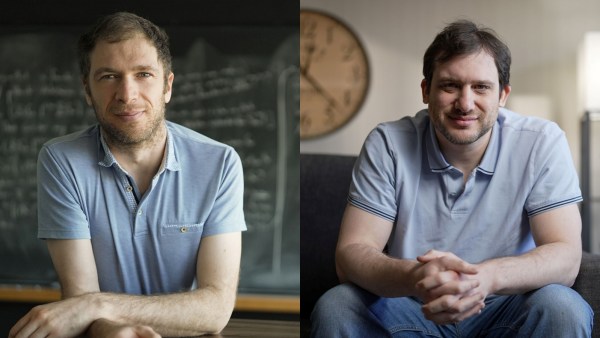 John Pardon (left) and Jacob Tsimerman. (Credit: International Mathematical Union)
How China built its scientific ecosystem
Considering how rare this distinction is, the Fields Medal makes global headlines every time it is announced. This year it has garnered special attention because of the presence of two Chinese nationals on the list, both recognised for their role in resolving a few long-standing puzzles in mathematics. It is being seen as a validation of the consistent effort that China has made on improving the quality of higher education and basic research over the last couple of decades.
China’s emergence in science and technology sector has been noticeable for several years now. At least two of its universities consistently rank in the top 20 in the world and 4-5 in the top 50. Its expenditure on research and development (R&D) has grown from less than one per cent of GDP in 2000 to about 2.6 per cent now. Considering that China’s GDP itself has grown by over ten times during this period, the investments in R&D have been massive.
Story continues below this ad
According to the latest OECD Science, Technology and Innovation Outlook, China is now spending almost as much as the United States on R&D in purchasing power parity terms. Its researcher base has increased by over three times in the last 20 years, and now adds to more than 2.28 million, the highest in the world. It is also one of the top contributors of research papers in the most prestigious and cited scientific journals.
While it has been steadily strengthening its credentials as a scientific superpower, China is still largely absent from the world’s greatest scientific laurels. It has had just three Nobel Prize winner in sciences till now, for example. But it was only a matter of time before this begins to change, and the Field Medal wins could very well be the beginning of widely-expected dominance of China at these awards.
Incidentally, both Deng and Wang are alumni of Peking University, one of the top universities in China that is consistently featured in the world’s top 20. The university is one of the key institutions to have received sustained government support for under elite education initiatives.
Why is this important
The Fields Medal recognition might be new, but China’s emerging talent in mathematics has been evident for quite some time now.
Story continues below this ad
At the International Mathematical Olympiad, the world’s toughest high-school level mathematics competition, China has won more team and individual gold medals than any other country. Since 2000, Chinese teams have secured the first rank all but eight times. They have never finished outside of top three since 1997.
China’s rise in artificial intelligence could also be attributed to its proficiency in mathematics. Foundational advancements in AI are rooted in mathematical theories, and China’s capabilities in AI are probably second only to the United States.
Where does India stand
A strong tradition of mathematics has existed for long in India too, but it is still to build a critical mass of leading mathematicians at its universities and institutions. Some of the best Indian mathematicians happen to be working at institutions in other countries. Two Indian-origin Indians have so far won the Fields Medal, Manjul Bhargava in 2014 and Akshay Venkatesh in 2018.
Bhargava is a Canadian-American while Venkatesh moved to Australia when he was very young. Incidentally, Bhargava, who is an accomplished tabla player and also a scholar of traditional Indian knowledge systems, is now advising the Indian government to reform the education system and improve the research ecosystem in the country.
Story continues below this ad
He was part of the panel which drafted the New Education Policy, and also one of the brains behind the establishment of the Anusandhan National Research Foundation. He is also active in popularising mathematics, particularly the Indian systems.