

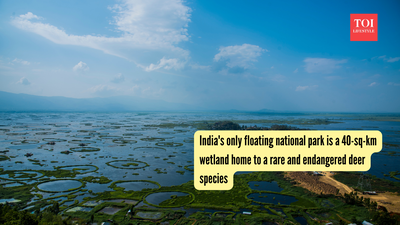
Have you ever imagined a floating forest, where the ground shifts and drifts instead of staying put? It reads like something out of a fantasy novel rather than an actual place you could visitBut this dreamy place is indeed real and the only one of its kind in the entire world, located right here in India’s northeast, in Manipur.
A national park that floats on Loktak Lake
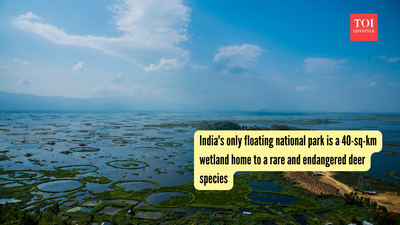
Keibul Lamjao National Park, located on the southern edge of Loktak Lake in Manipur’s Bishnupur district, is roughly 50 kilometres from Imphal. Spread across about 40 square kilometres, it holds the title of being the world’s only floating national park, built entirely on Loktak Lake, the largest freshwater lake in northeast India.
But what makes the ecosystem float on water
The magical ingredient that helps to make the ecosystem float is its phumdis, which are thick, floating mats made of decomposed vegetation, soil, and organic matter.
CJP Jantar Mantar Protest Updates
Unlike ordinary islands, these are living, shifting ecosystems that rise and fall with the lake’s water levels. They support plant and animal life while floating on the surface, and this constant movement plays a pivotal role in keeping Loktak Lake’s ecology in balance.
The Floating National Park is the last refuge of the endangered dancing deer
The park’s biggest claim to fame is the Sangai, also called the brow-antlered or “dancing deer,” found only in this part of the world. Originally set up as a wildlife sanctuary in 1966 to protect this species, the area was upgraded to national park status in 1977. Today, it remains the Sangai’s last natural habitat anywhere on Earth.
There are several legends associated with the place
According to legends, Sangai was once a prince from the Luwang clan, one of Manipur’s nine Meitei clans, who turned himself into this graceful deer. According to UNESCO, another tale associates it with the ancient royal boat, the Hiyang Hirel, which was carved and decorated with a Sangai head at its bow.Another legend states, Moirang Kangleirol, the folklore of Moirang: a hero named Kadeng Thanjahanba once gifted his beloved, Tonu Laijingrembi, a pregnant female Sangai, and set her free in the wilds of Keibul Lamjao. As the story goes, that single act is why the deer has called this place home ever since.And beyond these stories, the area around Loktak Lake holds several other sacred sites too, making the whole region feel like it’s woven through with myth as much as it is with water and wildlife.
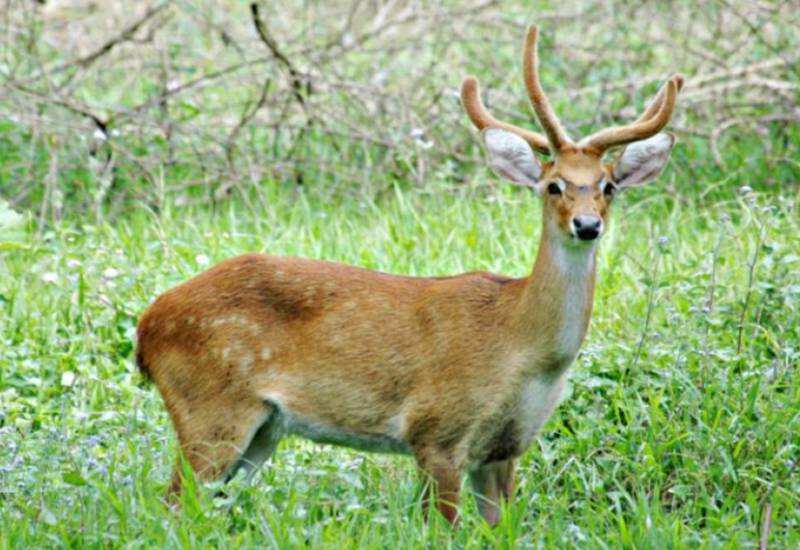
Sangai deer found only in the floating national park (Photo: West Bengal Zoo Authority)
The national park is home to other unique wildlife
Beyond the Sangai, the park supports hog deer, otters, fish, and a wide range of plant life, while Loktak Lake’s surrounding wetlands help the local communities sustain their livelihood through fishing and farming. This ecological richness has earned the Keibul Lamjao Conservation Area a place on UNESCO’s Tentative List of World Heritage Sites, recognising the global importance of this floating wetland system.
Why is Keibul Lamjao National Park important?
The Keibul Lamjao National Park is one of the rarest wetland ecosystems on the planet that goes far beyond being just a scenic place to visit. It shows how nature, left to itself, can quietly build habitats that seem almost impossible and that’s also why the Keibul Lamjao Conservation Area has found a spot on UNESCO’s Tentative List for World Heritage recognition.