

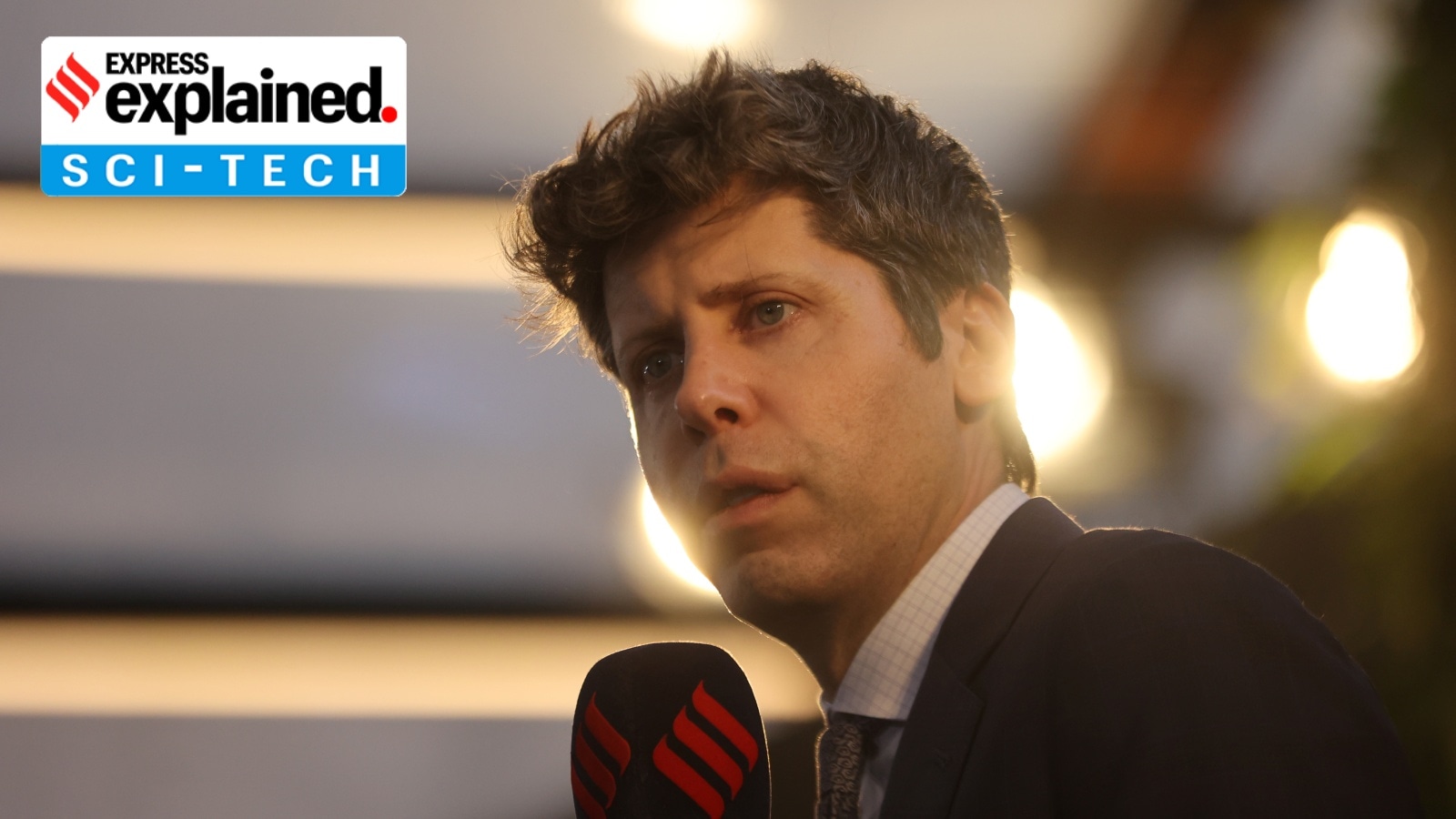
OpenAI is winding down its once-viral AI video generator Sora as it attempts to deepen its focus on enterprise business in a fast-evolving AI market.
The abrupt move came just six months after OpenAI launched a standalone app that lets users generate and share hyper-realistic AI videos in an algorithmic social feed.
In addition to the consumer app, OpenAI is discontinuing API-based developer access to Sora and has dropped plans to natively integrate AI video generation functionality in ChatGPT, according to a report by Wall Street Journal.
OpenAI’s Sora team is expected to pivot to research involving world-simulation and robotics. The company has not yet announced when the Sora app and its API will go offline. “We’ll share more soon, including timelines for the app and API and details on preserving your work,” it wrote in a post on X on Tuesday (March 24).
The announcement came a day after OpenAI updated the platform’s content policies. It underscores a major reset underway at the company, which has announced a number of consumer-focused AI products and features across video, audio, shopping, search and more.
This strategic shift includes redirecting computing resources and talent to focus on packaging its technology for enterprise clients and everyday users, as OpenAI looks to close the gap with rival Anthropic, which has seemingly pulled ahead with tools such as Claude Code and Cowork.
Sora’s rise and fall
The standalone Sora app was launched by OpenAI in September last year, alongside the release of its latest AI audio and video generation model Sora 2. The model was said to generate more realistic videos because it was better at following the laws of physics. The linked social app, on the other hand, lets users generate videos of themselves and their friends to share on a feed similar to Instagram Reels, YouTube Shorts, or other short-form video feeds.
Story continues below this ad
Soon after launch, users began creating deepfake videos of Sam Altman in various scenarios, a trend that the OpenAI CEO himself encouraged. Despite the realism of its outputs, experts were quick to flag copyright concerns and warned of misinformation risks. OpenAI later introduced controls that allowed rights holders to block the use of their likeness or intellectual property as well as harmful content filters, teen-focused guardrails, visible and invisible watermarks, etc.
The Sora app, which did not come to India, saw 33,32,200 downloads across the iOS App Store and Google Play Store till November last year. However, the downloads fell to 11,28,700 by February 2026, according to data from app analytics firm Appfigures.
While the Sora app was criticised as an AI slop-filled platform, the underlying model raised concerns about the implications of generative AI for Hollywood and the wider entertainment industry.
Even so, Disney looked to sign a first-of-its-kind deal with OpenAI where the studio would make a $1-billion equity investment in the ChatGPT creator and license 200 characters from its film and TV library to the Sora app, including Mickey Mouse, Darth Vader, Luke Skywalker, and Iron Man. This deal has also been scrapped now, with Disney saying that it appreciated “what we learned” from the relationship.
Story continues below this ad
OpenAI’s ‘side quests’
While OpenAI has not given a clear reason for Sora’s shutdown, the decision ultimately reflects trade-offs in how the company allocates GPUs (Graphics Processing Units) across AI product launches and research projects. Generating videos is said to be extremely compute-intensive, and OpenAI’s move indicates that it would rather use these chips to scale its AI coding assistant, Codex, as well as other enterprise products.
OpenAI’s hard pivot is widely seen as a response to Anthropic, which has always taken a more disciplined enterprise-first approach. Both AI startups are racing to meet the rising demand for AI productivity tools among coders and enterprise users, which could be critical segments for driving revenue with investors pushing AI companies to prove returns.
Fidji Simo, OpenAI’s chief of applications, reportedly told employees in a meeting last week that the company needed to “refocus on business customers and cut down on side quests that were becoming a distraction.”
“Companies go through phases of exploration and phases of refocus; both are critical. But when new bets start to work, like we’re seeing now with Codex, it’s very important to double down on them and avoid distractions. Really glad we’re seizing this moment,” Simo later wrote in a post on X.
Story continues below this ad
Sora is not the only casualty of OpenAI’s strategic reset. On Tuesday, OpenAI confirmed that it is moving away from its Instant Checkout feature, which would have allowed users to purchase select items from merchants on e-commerce sites directly within ChatGPT.
“We’ve found that the initial version of Instant Checkout did not offer the level of flexibility that we aspire to provide, so we’re allowing merchants to use their own checkout experiences while we focus our efforts on product discovery,” the company said.
At the same time, OpenAI announced a new ChatGPT shopping feature that lets users easily find and compare products available online by uploading images or describing them within the chatbot interface. Its long-term vision for ChatGPT involves a ‘super-app’ strategy with plans to bundle ChatGPT, the Atlas browser and the Codex coding tool into a single desktop application.