

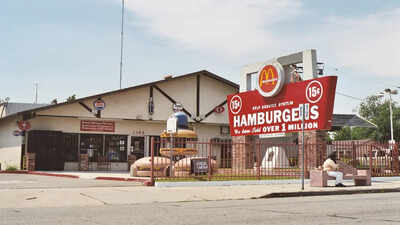
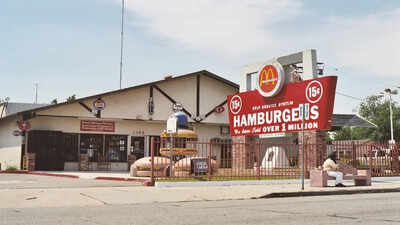
It may be easy to forget that the golden arches did not come about through some grand scheme on an international scale but rather through an everyday observation. During the late 1940s, Richard and Maurice McDonald operated a successful drive-in restaurant. They were dissatisfied with their operation; despite being busy, their business was chaotic. Their customers had to wait for a long time, their orders would be mixed up, and it cost them a fortune to have both a varied menu and carhops.However, instead of merely recruiting more staff members, the two took a radical step. The reason was that the existing drive-in system had flaws that made it difficult for the carhops to concentrate, and the large number of foods on the menu kept the kitchen out of sync. Thus, they closed the restaurant in the autumn of 1948 for three months, a strategy which is considered the most famous “reset” in the world of food. In this case, the brothers did not want to improve the kitchen but rather create a production line.The bold strategy of cutting the menu to save the businessThe radical strategy that saved their business included simplifying their menu. That is, the brothers decided to fire all their carhops and shrink their menu from twenty-five different meals to only nine types. By reducing the choice of foods, including burgers, cheeseburgers, potato chips, and beverages, they improved the efficiency of the kitchen. As a result, they were able to switch from the usual restaurant operation mode to the Speedee Service System model, which valued speed over choice.A research article published in the Pennsylvania State University journal titled The American Taste of Globalization explains that this 1948 overhaul was a full reorganisation of the production logic. The brothers removed flatware and switched to paper wrappers, which eliminated the need for dishwashers. This shift borrowed heavily from assembly line thinking, where each specific task was simplified so that work could move faster and with less variation. It was the moment the restaurant stopped being a kitchen and started being a factory for food.
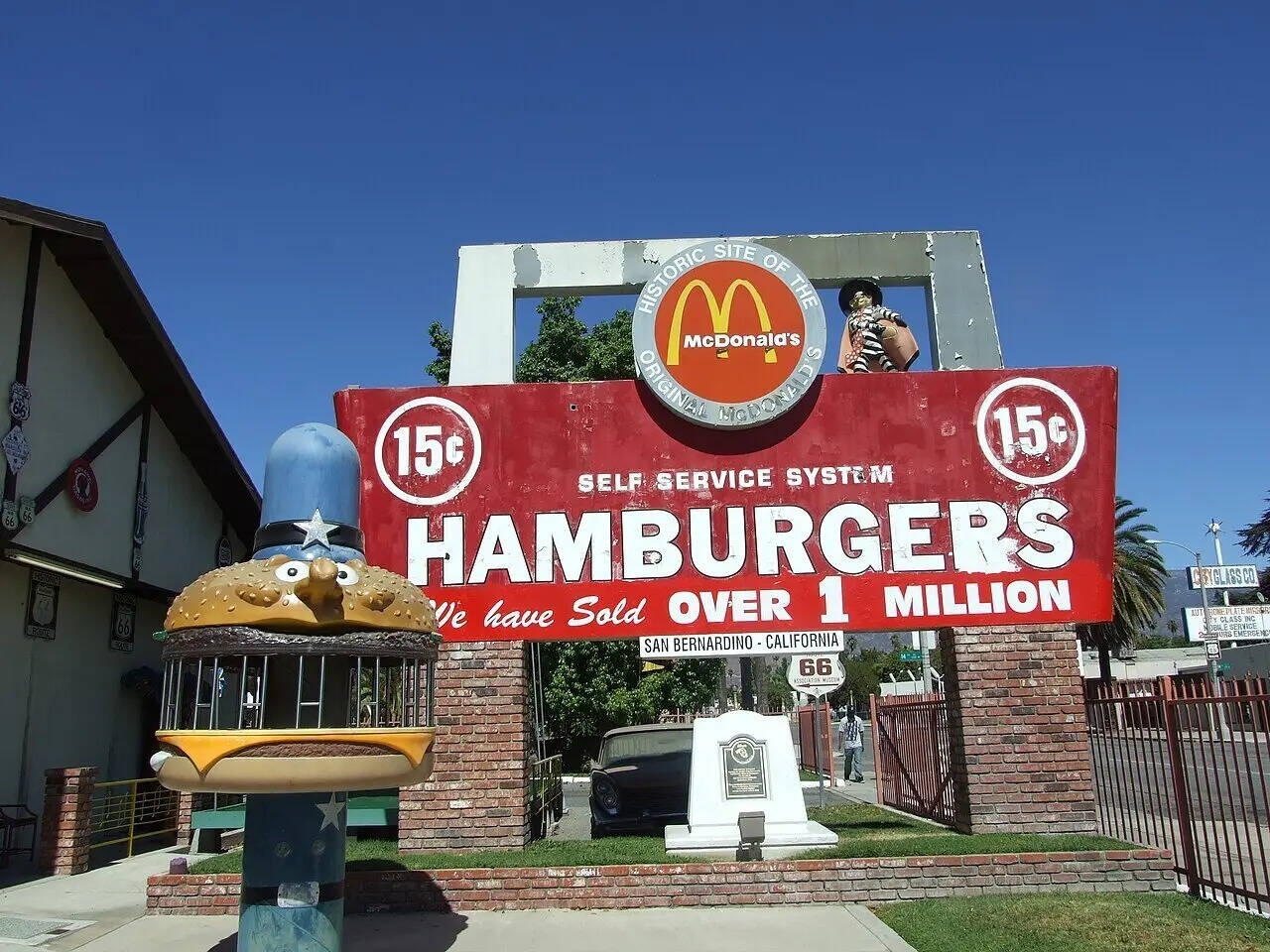
This “reset” created an assembly-line approach, drastically cutting costs and boosting sales, birthing the fast-food model that revolutionized dining globally. Tamsin Slater, via Wikimedia Commons
This change became evident immediately. With a fully functioning kitchen, they managed to reduce the cost of one hamburger to just fifteen cents from the previous thirty cents. With the reduced cost and lightning-fast services provided by the newly reorganised restaurant, their sales experienced an unprecedented growth, which the old system was incapable of delivering. Speed had become the main selling point. There were no longer any bottlenecks; instead, there existed a system that could serve several hundred customers hourly.Scaling from a local success to a global modelIt is what gave the McDonald brothers’ concept long-term success due to its sound economics. High volume is key to keeping the cost low, but not at the expense of quality. In eliminating carhops, they saved on both costs and mistakes. As stated in the article written by the University of Texas at Austin, the 1948 revamp was when the fast-food chain was truly born.This standardisation made the restaurant incredibly easy to copy. While traditional restaurants often relied on the specific skill of a master chef, the McDonald’s system was designed so that almost anyone could be trained to perform a specific part of the process. This predictability is what later allowed the brand to expand across the world. The brothers had created a blueprint that could travel, ensuring that a burger in California would taste and look exactly like a burger in Illinois.This decision continues to reverberate through each drive-thru across the globe even today. Richard and Maurice McDonald have proved that when you grow, simplicity often is the key. By cutting out all the extra frills and focusing on their business process, they did not just create a successful restaurant; they created a completely new way of life.