

We tend to celebrate leaders for their success, wealth, the empires they build. But the ones we truly remember are usually remembered for something that made them one of a kind and an epitome of who they were, how they made people feel, the values they refused to bend, the dignity they carried into every room.When Ratan Tata passed away in October 2024, the outpouring of grief across India and beyond spoke volumes. People weren’t only mourning a titan of industry. They were mourning a man who, despite running one of the world’s most respected conglomerates, somehow seemed to belong to everyone.
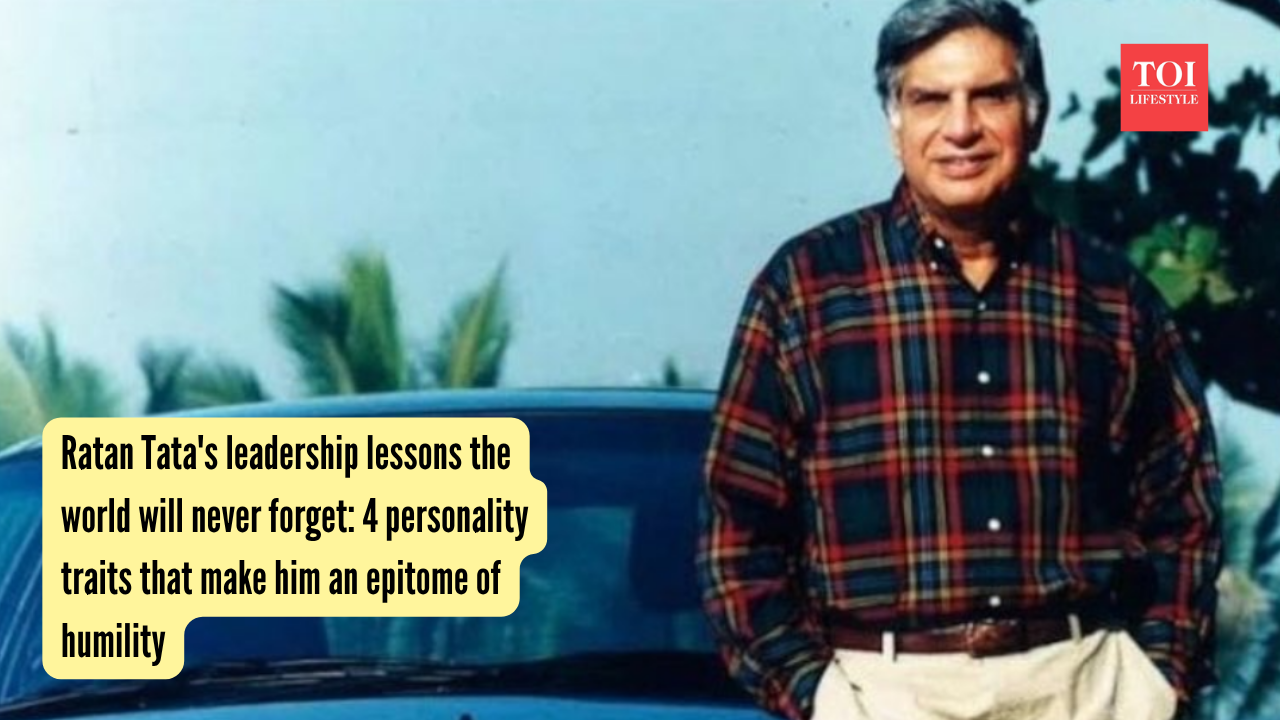
Ratan Tata (Photo: @CAronitpereira/ X)
Here are the qualities that made him the definition of what a leader should be.
Empathy and having a people-first approach
Ratan Tata led on the belief that a company’s success and its people’s well-being are inseparable. He encouraged open communication and trusted employees at every level, earning loyalty in return. One of the quotes feamously attributed tp him says, “Business need to go beyond the interest of their companies to the communities they serve.” The most interesting example in this light came after the 2008 Mumbai terror attacks on the Taj Mahal Palace hotel, when the group’s extraordinary care for affected staff and victims’ families became a shining example so much so that it is documented as case studies, including Harvard Business Review.
A visionary leadership
Ratan Tata took charge in 1991, just as India began opening its economy, and saw an opportunity others missed. An Indian firm could compete on the world stage. Over his tenure, group revenues grew immensely, due to global acquisitions like Tetley (2000), Corus (2007), and Jaguar Land Rover (2008).
An epitome of humility
For someone who ran a sprawling empire, Tata was quite low-key. He was famously known for his approachability, simple lifestyle, and refusal to flaunt his status. He treated everyone, from senior executives to factory-floor workers, with the same respect, and made a point of engaging with grassroots employees to understand how his businesses truly operated.That groundedness came with a gift for not taking himself too seriously. Speaking at Cornell University in 2011, he joked that five years in architecture school “taught me to doodle when I was bored” in dull board meetings, the very habit, he said, helped spark the Nano.
Purpose and philanthropy over personal gain
What truly set Tata apart was where his ambition pointed. Roughly two-thirds of Tata Sons is owned by philanthropic trusts, meaning much of the group’s profit flows back into society through education, healthcare, and rural development. In a 2006 interview quoted in Peter Casey’s book The Story of TATA, he said he longed to see “the disparity between the rich and poor reduced,” stating that India’s vast population should be treated as a strength rather than a burden. Tata personally donated a large share of his income to charity. He measured success not only in revenue but in lives improved, which meant that his timeless leadership was ultimately about service, not status or self-enrichment.