

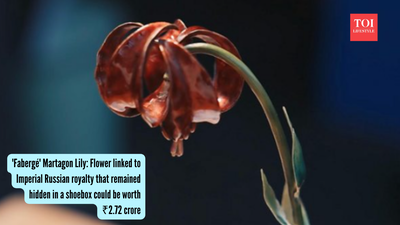
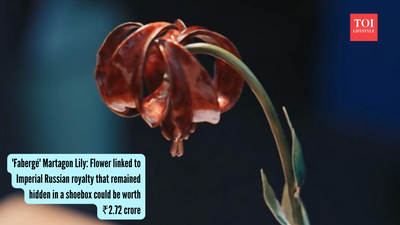
Family heirlooms are those precious gems that give a peek into years of precious inheritance and what it was like years ago for our ancestors.While some of those remain displayed in our drawing rooms, others are quietly left in a drawer for decades before anyone thinks to ask where they really came from and how valuable they are.That’s exactly what happened with a delicate enamel flower that spent years in a shoebox in Liverpool. While it just looked like a pretty keepsake passed down through the family. But it turns out this little flower was actually far more valuable and ‘royal’ than anticipated.
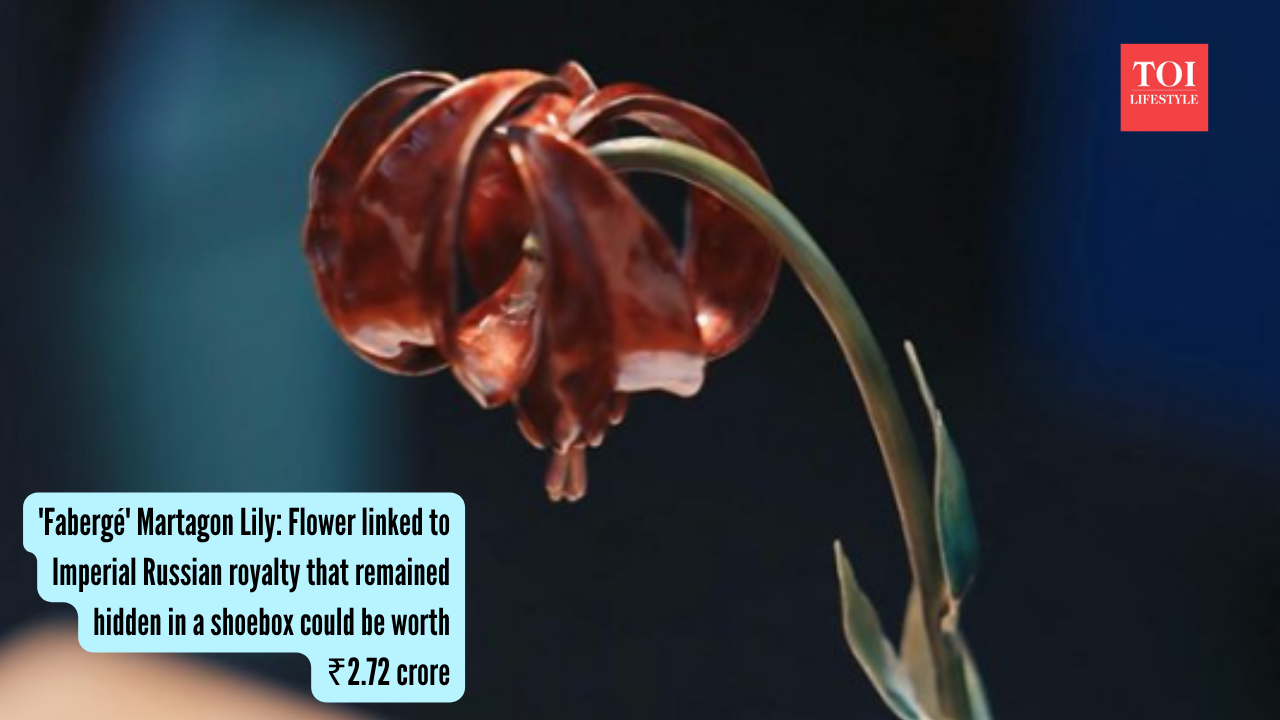
Photo: BBC/ Fake or Fortune
Flower with a royal past that spent its time in a shoebox
The treasure is the Martagon lily, a flower native to eastern Europe, recreated in enamel with a deep red bloom and bright green leaves. It sits on top of a slender gold stem, secretly reinforced with a steel rod to keep it upright, and is displayed inside an apparent rock crystal, water-filled vase.The flower belongs to a sales associate named Rachael, who inherited it from her step-grandmother, Mary. Family history suggests it originally belonged to Helen, the Queen Mother of Romania and a dedicated collector of Fabergé pieces, or those artifacts belonging to the luxury jewelry house – the House of Fabergé. It eventually made its way to Mary through a personal and professional connection through Rachael’s grandfather, Austin, who worked as a solicitor and had ties to the royal family.While Mary was alive, she was convinced the flower was authentic, and an auction house apparently agreed at the time, valuing it in the hundreds of thousands. After Mary passed away and the flower went to Rachael, the same auction house reportedly changed its mind and downgraded the valuation.
The ‘royal’ Fabergé flower could be worth millions
The piece was featured in the BBC’s Fake or Fortune, where presenter Fiona Bruce and art historian Philip Mould dig into Russian archives and speak to specialists connected to the royal families of Yugoslavia, Denmark, and Romania to connect the dots of the flower’s journey. According to the BBC’s own preview for the episode, if the flower turns out to be genuine, it could be worth more than a quarter of a million pounds.Mould also consults Geoffrey Munn, an expert who has handled numerous Fabergé flowers over the years and once valued a similar piece at £1 million on the Antiques Roadshow back in 2018, which also stands a place among one of only three items in that show’s history to reach that figure. Separately, Mould speaks with Victoria and Albert Museum jewellery historian Helen Molesworth, who explains the craftsmanship behind these pieces.
Why is verifying its authenticity so tricky
The House of Fabergé, founded in Saint Petersburg in 1842 under master craftsman Peter Carl Fabergé, has been known for its Imperial Easter eggs, but the firm also produced jewellery, tableware, and flowers that were exchanged as gifts among European royalty.Because there’s no official Fabergé authority to certify pieces today, verifying authenticity falls entirely to auction houses and independent specialists, and plenty of convincing fakes have fooled buyers in the past.Whether Rachael’s shoebox flower turns out to be a genuine slice of Imperial Russian history or a beautifully made “Fauxbergé” is yet to be found out!