

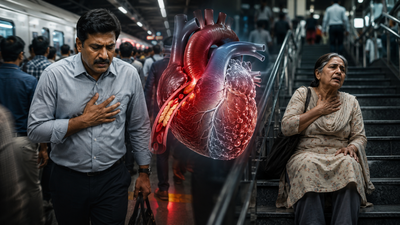
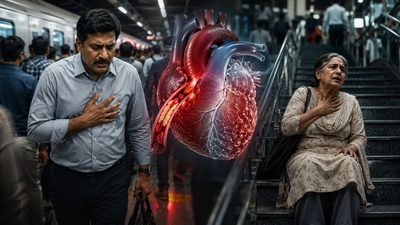
Ask someone what a heart attack and heart failure are, and there’s a good chance the two will be used interchangeably. Both sound frightening. Both involve the heart. And both can be life-threatening. But medically, they are not the same thing at all.The confusion is understandable, especially in a country where cardiovascular disease is a major health burden. The World Health Organization says cardiovascular diseases accounted for 27% of all deaths from non-communicable diseases in India in 2016, while 45% of deaths among people aged 40 to 69 were linked to cardiovascular disease.“One misunderstanding I come across repeatedly in my practice is the belief that a heart attack and heart failure are the same condition. Families often tell me, “Doctor, he had heart failure,” when they are actually referring to a heart attack that happened years ago. While the two conditions are related, they are very different, and understanding that difference can help people recognise symptoms earlier and seek timely treatment,” Dr. Ajeet Bana, Chairman – Cardiac Sciences, EHCC Hospital, and a senior cardiothoracic surgeon told TOI Health. “I usually explain it with a simple example. Think of the heart as a pump and the coronary arteries as the pipes supplying fuel to keep that pump working.”
Heart attack and heart failure
“A heart attack occurs when one of those arteries becomes suddenly blocked. Blood supply to a part of the heart muscle stops, and unless it is restored quickly, that portion of the muscle begins to die. This is an emergency where every minute matters,” says the doctor.“Heart failure is different. Here, the pump itself becomes weak or stiff and is unable to circulate enough blood to meet the body’s needs. The heart has not stopped working, but it is no longer working efficiently. Heart failure usually develops gradually and often reflects damage that has accumulated over time,” he adds.
The confusion
The doctor explains: The reason people confuse the two is because one can lead to the other. A large heart attack can permanently damage the heart muscle. If enough muscle is affected, the pumping function gradually declines, and over months or years the patient may develop heart failure. However, not everyone with heart failure has suffered a heart attack. Long-standing high blood pressure, damaged heart valves, cardiomyopathy, infections affecting the heart muscle and certain inherited conditions can all weaken the heart.
The symptoms also differ
Dr Ajeet says patients having a heart attack commonly experience chest heaviness or pressure, pain spreading to the arm, jaw, shoulder or back, sweating, breathlessness or nausea. However, in women, older adults and people with diabetes, the symptoms may be much less typical. They may simply complain of unusual fatigue, breathlessness or discomfort that they mistake for acidity or indigestion.“Heart failure presents differently. Patients often tell me they can no longer climb a flight of stairs without stopping. They become breathless while lying flat, their ankles begin to swell and everyday activities leave them unusually tired. These symptoms are frequently dismissed as ageing or lack of fitness, when in reality they may indicate that the heart is struggling,” he adds. “My advice is simple. Never ignore new chest discomfort, unexplained breathlessness or a sudden decline in your ability to carry out routine activities. Your heart usually gives warning signs before a major event occurs. Recognising those signs and seeking medical attention promptly often makes the difference between a manageable condition and a life-threatening emergency,” he says.
Recognise what your heart is trying to tell you
“Understanding the distinction between a heart attack and heart failure is not simply about using the correct medical term. It is about recognising what your heart is trying to tell you and giving it the attention it deserves before the damage becomes permanent. Fortunately, both conditions are increasingly treatable when recognised early. Advances in medicines, angioplasty, bypass surgery, heart failure management, mechanical circulatory support and heart transplantation have dramatically improved outcomes. However, no treatment is more effective than preventing irreversible damage in the first place,” the expert concludes.So when someone says, “He has a weak heart,” that’s not enough information. The underlying problem matters. And recognising the difference between a heart attack and heart failure isn’t just about getting the terminology right. It can determine how quickly someone seeks medical attention—and, in the case of a heart attack, those minutes can make a very real difference. Medical experts consulted This article includes expert inputs shared with TOI Health by: Dr. Ajeet Bana, Chairman – Cardiac Sciences, EHCC Hospital, and a senior cardiothoracic surgeonInputs were used to discuss the difference between heart attack and heart failure.