

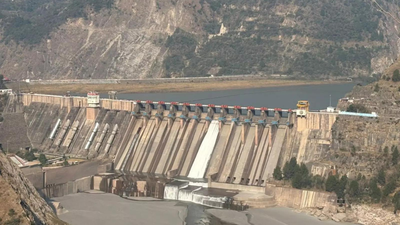
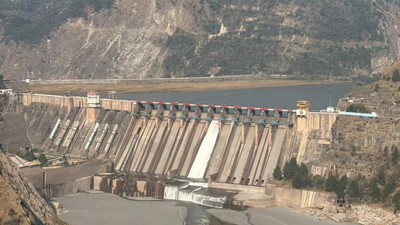
The Indus Waters Treaty (IWT) with Pakistan will no longer function in its present form, the government has concluded hardening its position on the contentious water issue amid little indication of Islamabad discontinuing its covert backing of cross-border terrorism. India is not yet actively considering abandoning the World Bank-brokered 1960 Treaty – an option it still has on the table – but a source speaking on condition of anonymity said it’s not in India’s interest to remain a party to the Treaty anymore. India had formally sought a review and modification of the IWT citing demographic shifts, clean energy priorities and new climate realities, prior to putting the Treaty in “abeyance” last year in retaliation for the Pahalgam terrorist attack. “It would be accurate to say that the IWT in its present form will not function at all. If provisions related to river water sharing have to be reactivated, they will have to be done in a different form. Not in the present form,” said the source, adding India will await further developments before considering the maximalist option of withdrawing altogether from the IWT. The IWT does not have an exit clause, but it’s of significance to India that Article 60 of the Vienna Convention on the Law of Treaties (VCLT) states that a significant violation of a treaty by one party allows other affected parties to suspend the treaty in whole or in part. While India and Pakistan are both not party to the VCLT, India believes that if it invoked customary international law, then Pakistan’s state sponsorship of terrorism could be considered such a breach of obligations. According to Indian authorities, as a sovereign state, India cannot be compelled to stay in a treaty that is demonstrably not in its interest. These assertions come in the middle of efforts by Pakistan to internationalise the IWT issue by citing “unilateral and unlawful” suspension of the Treaty and claiming it threatens the water security and livelihoods of its 240 million citizens. Outside of the Treaty framework, India continues to provide issue flood warnings to Pakistan to ensure protection of lives and property. India believes that Pakistan has created an elaborate victimhood narrative, ignoring the fact that more water of the Indus system is lost in Pakistan due to surface runoff than India’s entire share under the Indus water stream. Sources also point to how Pakistan has since 1976 not built a single large-scale storage project or invested in modern water management, despite receiving nearly 80% of the Indus Basin waters under the Treaty. As far as India is concerned, Pakistan’s problem is water management, and not water availability. Fow India though, the central issue remains Pakistan’s support to cross-border terrorism. India maintains that there is no deadline for keeping the IWT in abeyance. “The Treaty will remain in abeyance until Pakistan credibly and irrevocably abjures its support for cross-border terrorism. This is the threshold condition,” said a source, adding that Pakistan continues to provide enabling platforms just across the LoC to terrorist groups and individuals banned by the UNSC 1267 Sanctions Committee. “During this period, India will pursue the optimal utilisation of its legitimate rights through scientific basin management, modern engineering practices, infrastructure modernisation and responsible stewardship of water resources,” said the source.