

In a recent Madras High Court decision, a Division Bench granted a husband’s appeal for divorce after finding that his wife had subjected him to mental cruelty. The judgment has drawn attention because the wife admitted to removing the thali chain (mangalsutra) when the couple separated. That single fact sparked questions: Does taking off a thali automatically mean cruelty? Can it end a marriage by itself? Here’s what really happened and what made the Court grant the divorce:
Why the thali matters: Culture, symbolism and emotion
For many Hindus, especially in southern India, the thali or mangalsutra is not merely jewellery. It is a social and cultural symbol that signals marital status, continuity and the husband’s well‑being. Traditionally, married Hindu women do not remove the thali while their husbands are alive; removing it is commonly viewed as a profound and unsettling break with marital norms. Because it carries such emotional weight, its removal can cause deep hurt and be read as a conscious rejection of the marriage.
But symbolism isn’t the same as law
The Madras High Court, comprising of Justices V.M. Velumani and S. Sountharwas, was careful not to convert social meaning into a blanket legal rule. The Bench made it clear that removing the thali is not, by itself, an automatic legal ground to dissolve a marriage or to prove cruelty under the law. Instead, the act may be one piece of evidence among many that helps a court draw inferences about the parties’ intentions and the health of the marriage.The Bench said, as reported by Law Chakra:“The removal of thali chain is often treated as an unceremonious act. We don’t say for a moment that removal of thali chain per se sufficient to put an end to the marital knot, but the said act of respondent is a piece of evidence in drawing an inference about the intentions of the parties. The act of respondent in removal of thali chain at the time of separation coupled with various other evidences available on record, compel us to come to a definite conclusion that the parties have no intention to reconcile and continue the marital knot.”
What happened in this case
The husband, who served in the Indian Army, had asked for divorce on the ground of mental cruelty. The couple got married on 30.08.1977 as per the Hindu rites and customs, and they had two children together. But, they had been living separately since 2011. The lower court refused to dissolve the marriage, finding the husband’s evidence insufficient; the husband then appealed to the Madras High Court.Before the High Court, the husband alleged that his wife repeatedly suspected him, publicly accused him of having an extra‑marital relationship, humiliated him before colleagues, students and even the police, and thereby caused him severe emotional distress. The Court examined the record and found no evidence to substantiate the wife’s allegations against the husband. More importantly, the Bench noted these accusations were made in public and could seriously damage his reputation and dignity.The Court concluded that repeatedly casting aspersions on a spouse’s character and making unsubstantiated public allegations amounted to mental cruelty in this marriage. That finding formed the core legal basis for granting the divorce.
Where the thali fit into the decision
During testimony, the wife admitted removing the thali chain when the parties separated, though she said she retained the thali itself. Her counsel argued that Section 7 of the Hindu Marriage Act does not require tying the thali, so its removal cannot affect the marriage’s legal validity.
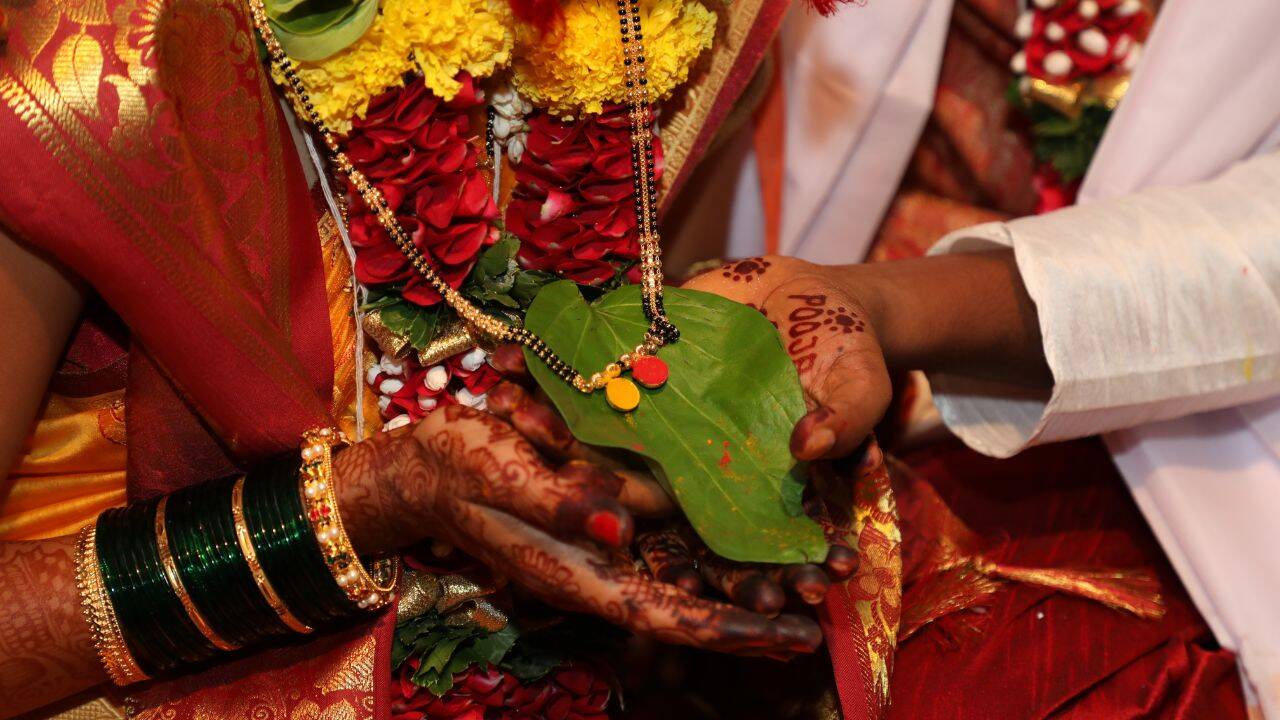
Representative image
The High Court accepted that legal point but still took cultural context into account. The Bench referred to an earlier Madras High Court (in Vallabhi v. R. Rajasabahi case) ruling that described the removal of the mangalsutra as an act which, in some circumstances, reflects mental cruelty because it can cause agony and hurt sentiments. In the present case, the Court treated the removal of the thali chain as corroborative evidence: an act that, when considered alongside other facts (long separation, public accusations, absence of attempts at reconciliation), supported the inference that the marriage had irretrievably broken down.
The Court’s careful distinction: Evidence versus automatic rule

The judgment repeatedly stresses a key distinction. Removing a thali can be a meaningful, symbolic act that helps judges infer the parties’ intentions. But it is not a standalone legal proposition that always equals cruelty or divorce. The High Court wrote that removal “per se” is not sufficient to end the marital knot; rather, it is a piece of evidence suggesting lack of intent to reconcile when combined with other behaviour.
Why this matters for couples and observers
For couples: Cultural practices can influence how courts interpret conduct, but cultural symbolism alone is rarely decisive. Courts will look at the full picture: allegations, supporting evidence, public conduct, attempts (or lack of attempts) at reconciliation, and the duration of separation.For lawyers and advisors: It’s wise to present the broader factual matrix rather than rely on a single symbolic act as the centerpiece of a case.For the public: Headlines that claim the thali’s removal automatically ends a marriage oversimplify the law. This judgment is important for what it shows about context-based legal reasoning, not for creating a new categorical rule.