

Octopuses might have an appearance of gooey creatures with suckers in their arms, but do not get decieved by how they look, these molluscus might actually be a lot brainier than you think! Some scientists even believe that octopuses may be among the earliest truly intelligent creatures on Earth. They solve puzzles, untie knots, open jars, and master escapes from aquariums.What’s truly amazing is that their smarts evolved separately from ours, with about two-thirds of their neurons located in their arms rather than their central brain.
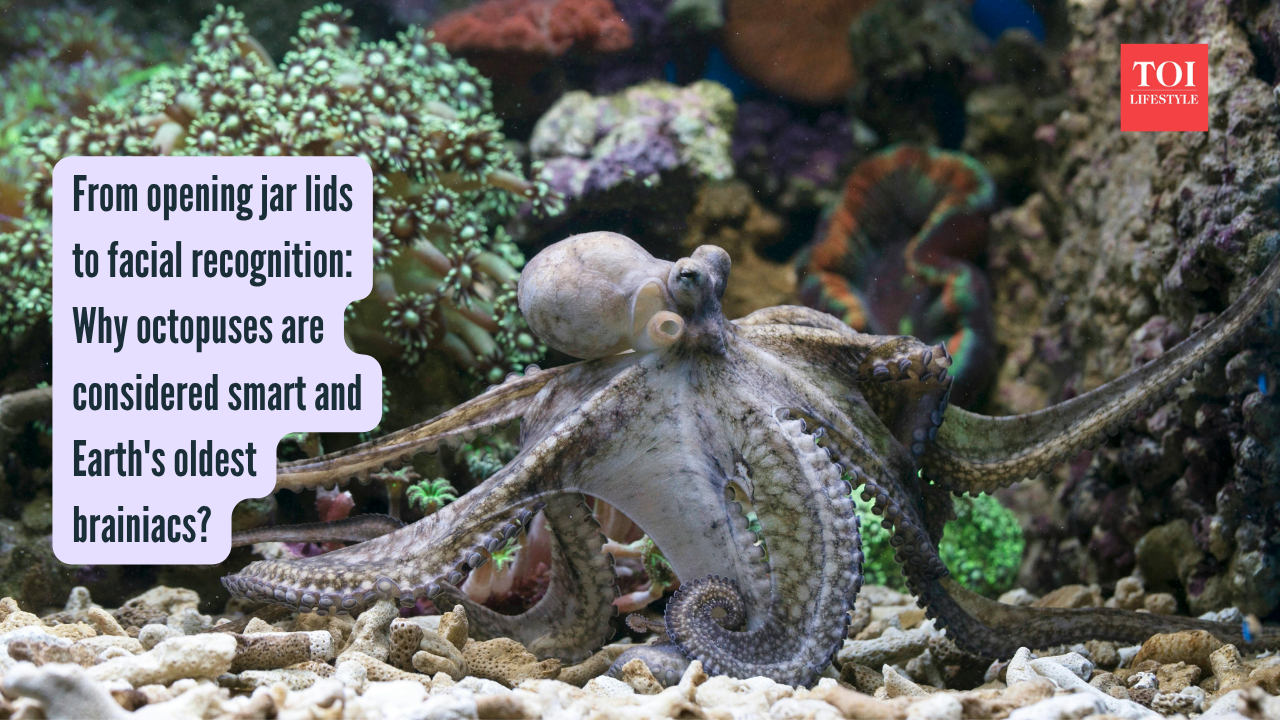
Representative Image
Octopuses brains have powers beyond their kin
Despite squid cousins like sea slugs, octopuses show puzzle-solving, knot-untangling, jar-opening, and aquarium escapes.The Natural History Museum notes that octopus intelligence evolved on a completely different path from ours. Around two-thirds of their roughly 500 million neurons sit in their eight arms, rather than the doughnut-shaped central brain that surrounds the esophagus in their head.The common octopus (Octopus vulgaris) matches a dog’s neuron count. The brain-to-body ratio is the most of all invertebrates, exceeding many vertebrates, though not mammals. The intelligence of a creature is also measured by the number of folds in the brains, ubt smarter animals tend to have a higher brain-to-body ratio, but this ratio means heavy “investment” in thinking.
They are problem solvers at work
According to a Natural History Museum report, “In experiments they’ve solved mazes and completed tricky tasks to get food rewards. They’re also adept at getting themselves in and out of containers,” notes researcher Jon.A lab octopus raided fish tanks at night, ate, cleaned up, and returned undetected. “I remember reading one about a lab where all the fish were going missing from their tank,” he revealed.All this happened because of the octopus’ mischief, “The staff set up a little video camera and it turned out that one of the octopuses was getting out of its tank, going to the other tank, opening it, eating the fish, closing the lid, going back to its own tank and hiding the evidence.” Jon recalled.
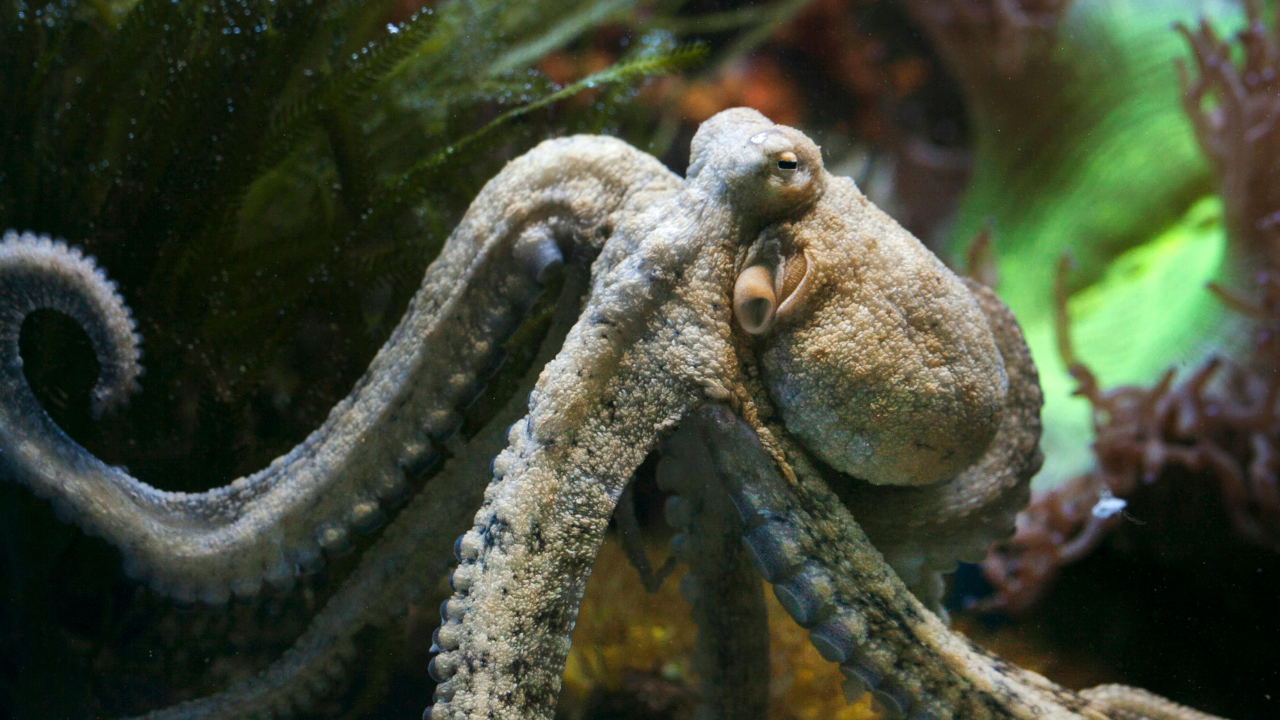
Image: Canva
They can also remember and recognise faces
Large optic lobes in their eyes help them have a better vision. “Octopuses appear to be able to recognise individuals outside of their own species, including human faces,” says Jon.According to a scientific American report, a New Zealand octopus targeted one staffer with water jets. Seattle Aquarium tests showed giant Pacific octopuses distinguished “nice” feeders from “mean” stick-prodders, despite uniforms.