

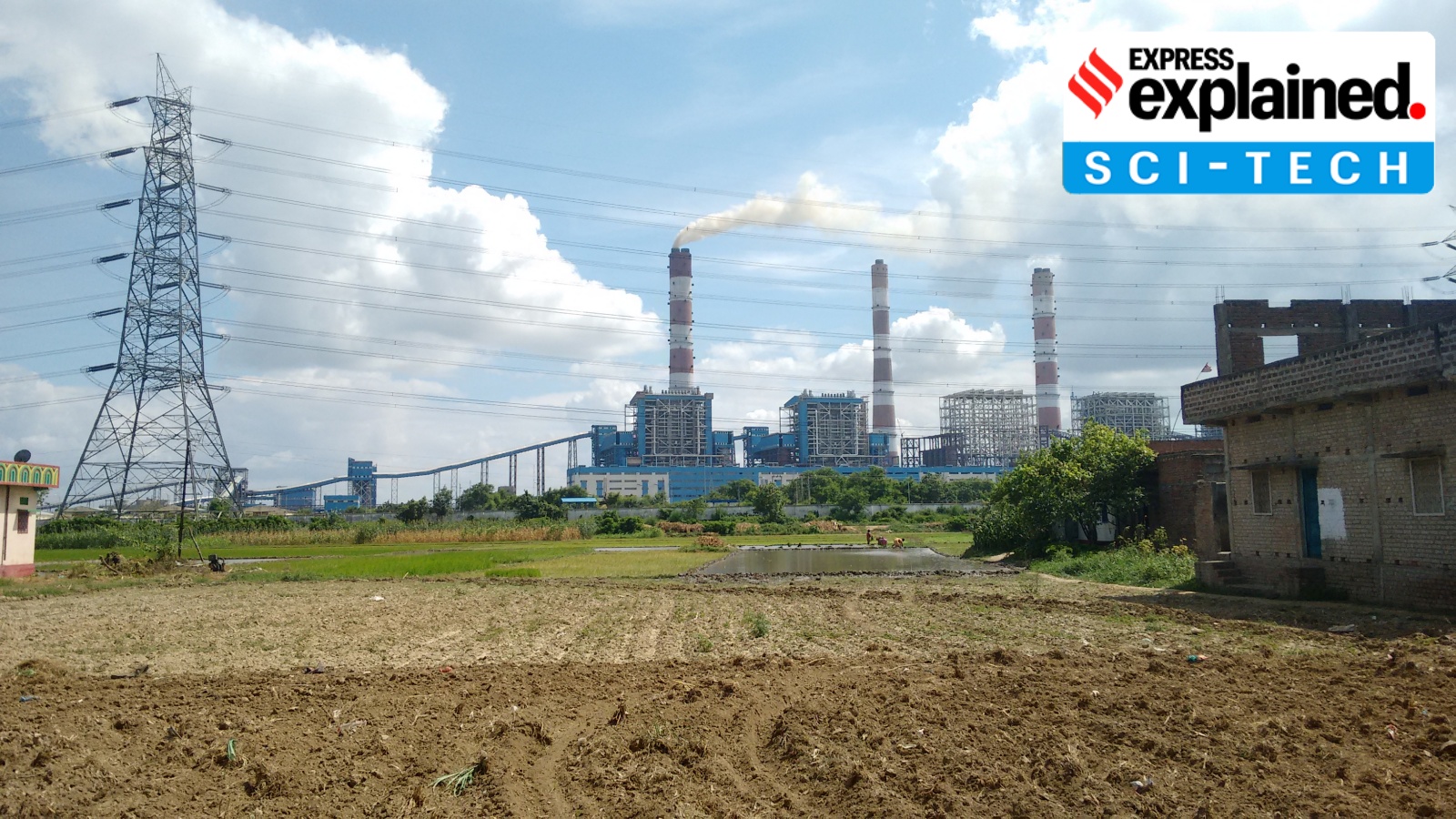
The Grid Controller of India (Grid India) identified nine thermal power units with a combined capacity of about 1.8 gigawatts (GW) that can be repurposed as synchronous condensers (SYNCONs), a move aimed at strengthening grid reliability as India navigates the challenges of integrating rapidly growing renewable energy capacity.
Of the shortlisted power plants, eight are coal- or lignite-based, while one is gas-based. All of them are either under prolonged outage or operating at very low utilisation levels, making them potential candidates for conversion rather than continued power generation.
The proposal follows a review meeting on summer power preparedness held in April under the chairmanship of the Union Power Secretary Pankaj Agarwal, where stakeholders were asked to explore the possibility of converting underutilised thermal assets into grid-support infrastructure.
“The units of thermal power plants (including gas-based power plants) which are not in operation or otherwise operating sub-optimally may be considered for conversion into SYNCON (synchronous condenser). A suitable compensation mechanism may also be explored,” the minutes of the meeting noted.
A synchronous condenser is a generator that spins freely without producing electricity. Instead, it provides inertia, reactive power and voltage support to the grid, helping maintain stability during sudden fluctuations in power demand or supply. Grid operators often describe it as an electrical shock absorber that keeps the system balanced, particularly as increasing shares of solar and wind power reduce the stabilising influence provided by large thermal generators.
SYNCONs to be near RE complexes
The proposed list spans five states and includes a mix of coal, lignite and gas-based assets that are either idle or significantly underutilised.
Of the nine shortlisted plants, Rajasthan accounts for the largest share with three facilities — Giral Thermal Power Station, Kota Super Thermal Power Station and Dholpur Gas Power Station. Gujarat has two plants on the list: Akrimota Lignite-Based Thermal Power Station and Kutch Lignite Thermal Power Station.
Story continues below this ad
The list also includes Maharashtra’s GEPL Phase-I Thermal Power Station and Mihan Thermal Power Station, along with Raichur Thermal Power Station in Karnataka and Tuticorin Thermal Power Station in Tamil Nadu.
Grid India noted that thermal units have inherent capability to provide reliability support such as inertial response (for frequency stability), short-circuit current (for grid strength, transient stability), voltage control and primary response (for frequency stability) to the grid.
It also cited examples from the US, UK and Mexico where thermal power units have been converted into synchronous condensers, demonstrating the viability of such repurposing.
“Such repurposing can be a pragmatic option to retain the essential reliability services inherently available from synchronous machines, especially at load centres and near large renewable energy complexes,” it added.
Story continues below this ad
In its note, Grid India said the need for synchronous condensers has been underscored by recent grid disturbances, technical studies and expert committee recommendations in India and abroad.
It cited the June 2024 grid event triggered by the tripping of the Champa-Kurukshetra HVDC link, which led to a load reduction of about 16.5 GW across the Northern Region and exposed voltage stability challenges, highlighting the role of thermal units in providing voltage and reactive power support during contingencies.
It also referred to recommendations of the Northern Regional Power Committee, which assessed system strength in the Rajasthan Renewable Energy Complex and called for the deployment of synchronous condensers at multiple locations.
“Further, the disturbances in Spain and Portugal on 28 April 2025 highlighted the importance of adequate voltage control, dynamic reactive power support, and system strength in grids with high penetration of inverter-based resources, thereby reinforcing the role of synchronous condensers in maintaining grid stability,” it added.
Story continues below this ad
Grid concerns due to high RE penetration
According to Grid India, the need for synchronous condensers is becoming increasingly pronounced as renewable energy assumes a larger share of the power mix.
“The rapid addition of renewable capacity has led to the large-scale clustering of solar and wind projects in renewable-rich states, such as Rajasthan, Gujarat, Tamil Nadu, Karnataka, and Andhra Pradesh. In many of these locations, the RE plants and pooling stations are situated in remote areas with relatively weak transmission interconnections and limited availability of nearby synchronous machines, resulting in low system strength at certain locations,” Grid India noted.
At the same time, the growing penetration of renewable energy is steadily reducing system inertia — the kinetic energy traditionally provided by large conventional generators that helps the grid withstand sudden disturbances. The problem is particularly acute during peak solar generation hours, when a significant portion of electricity is supplied by inverter-based solar plants rather than rotating generators.
In such a scenario, the grid may have surplus active power during solar hours, but still face local deficiencies in reactive power support and inertial response, both of which are critical for maintaining voltage and frequency stability.
Story continues below this ad
“The new thermal unit may have challenges in getting committed to high RE penetration. Out of merit commitment may add to the active power imbalance and economic implications,” it noted.
Thus, the grid operator suggested that non-operational or underutilised thermal power plants located near major load centres, renewable energy hubs and electrically weak regions should be systematically evaluated for conversion into synchronous condensers.
“This may be taken up through detailed technical studies, including power system simulations, short-circuit level assessment, voltage stability analysis and cost-benefit evaluation,” it added.