

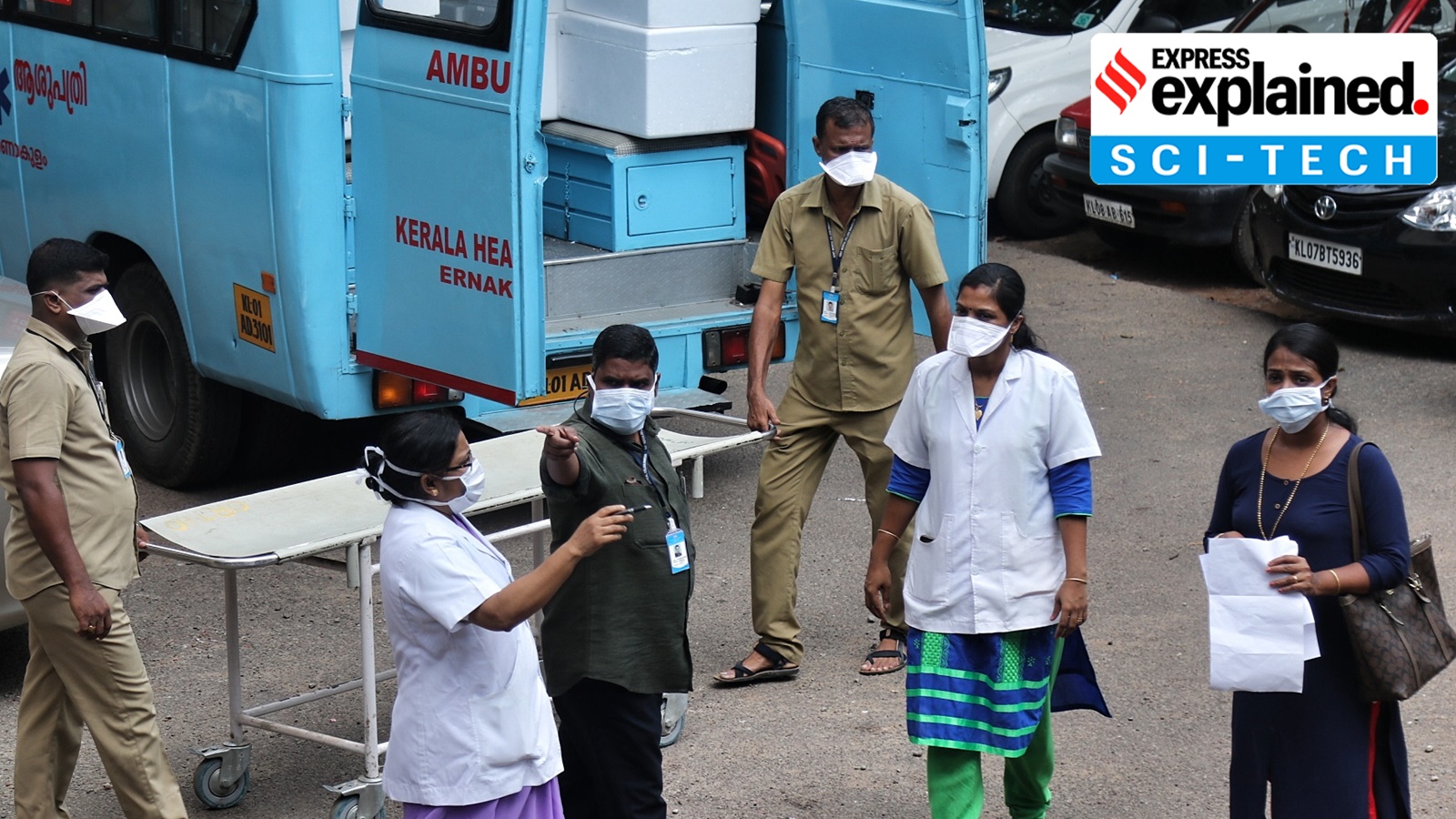
Recent episodes involving cases of ebola, hantavirus, and nipah virus show that dangerous zoonotic infections are no longer rare, isolated events. They are appearing with increasing regularity at the interface of humans, animals, forests, farms, hospitals, and global travel.
These outbreaks are not only scientific events; they also expose weaknesses in surveillance, public trust, vaccine access, and international preparedness.
While these viruses differ in ecology, reservoirs, and routes of spillover, recent cases show why they remain serious international health concerns. Ebola virus disease is feared because it can cause severe illness and death, with an average case-fatality rate of around 50%. Recent cases in central Africa have again shown how conflict, displacement, unsafe burials, distrust of health workers, and weak surveillance can make outbreak control extremely difficult.
Hantaviruses, named after the Hantaan River region in South Korea, are mainly rodent-borne viruses. Some cause kidney disease, while others cause hantavirus pulmonary syndrome, a severe lung illness that can rapidly progress to respiratory failure and shock. The cluster linked to the MV Hondius cruise ship brought hantavirus back into public discussion because it showed how a virus usually associated with a local ecological niche can acquire international significance through travel, enclosed spaces, and multi-country contact tracing.
Nipah virus, carried mainly by fruit bats, can cause respiratory illness and encephalitis, with case-fatality rates estimated at 40-75%. Recurring concerns in India and Bangladesh show that it remains a persistent regional threat.
Threat to humans
Under particular conditions, all three infections can involve human-to-human transmission: Ebola through infected body fluids, Nipah through close household or healthcare contact, and Andes hantavirus, unlike most hantaviruses, through limited person-to-person spread. This makes early detection, isolation, infection control, community trust, and vaccine preparedness inseparable.
Story continues below this ad
While a licensed vaccine exists for one major Ebola virus species, there are still no licensed human vaccines for Bundibugyo Ebola, Nipah virus, or hantavirus infections, and no simple curative treatment that can be relied upon once outbreaks begin.
The larger lesson is that such outbreaks are becoming part of a recurring global pattern. A disease that begins in a forest village, farm, hospital ward, or ship can now create cross-border concern within days. The response, therefore, cannot begin only after deaths are reported. It must be built in advance.
Preempting a pandemic
The solution may begin with basic research. Before a vaccine can be made, scientists must understand the biology of the pathogen: how it enters cells, how it causes disease, which proteins trigger immunity, how it spreads, and what kind of immune response may protect against it.
Much of this early work is done in publicly funded universities, national laboratories, and research institutions. But converting that knowledge into a usable vaccine requires industrial-scale capacity: process development, formulation, quality control, regulatory documentation, clinical-trial systems, manufacturing, and cold-chain planning. This is where industry becomes essential.
Story continues below this ad
In the past, the gap between university research and industrial vaccine development was large. Recent advances in vaccinology have significantly narrowed that gap. AI tools can now help scientists identify promising vaccine targets, predict immune responses, compare candidates, plan trials, and improve manufacturing.
But such projects still require conventional biological validation, safety testing, efficacy trials, and regulatory review. Platform technologies such as mRNA vaccines, viral vector vaccines, and recombinant protein systems can also speed up design once the genetic sequence or protective antigen of a pathogen is identified.
Faster and cheaper vaccine development
Covid-19 showed that vaccine design, testing, and scale-up can move much faster than was previously thought possible. However, these platforms are not freely available to all researchers. Many depend on patents, proprietary know-how, delivery technologies, specialised manufacturing controls, and regulatory expertise. This limits how quickly scientists in academia can convert promising laboratory ideas into deployable vaccines.
Rapid vaccine development for Ebola variants, hantavirus, Nipah, and similar pathogens will therefore would require strong academia-industry partnerships. Academic institutions can provide immunology, animal models, and early vaccine concepts; industry can provide scale-up, formulation, quality assurance, regulatory strategy, manufacturing, and distribution.
Story continues below this ad
The most difficult stage will be safety and efficacy testing. For pathogens such as Ebola, hantavirus, and Nipah, outbreaks are often unpredictable. Conventional large clinical trials may not always be feasible. Testing vaccines may require emergency trial designs, ring-vaccination studies, adaptive protocols, regional trial networks, and long-term preparedness sites in countries at risk. The problem is not only whether science can design a vaccine, but whether systems exist to evaluate it quickly and ethically when an outbreak occurs.
The economics is central. International vaccine companies may not find it financially attractive to develop vaccines that may be used only in limited outbreaks, in poorer regions, and in uncertain quantities. The public-health value is enormous, but the commercial market may be small.
The vaccine question, therefore, is not only scientific but also ethical and political: who should invest in protection against diseases that may never become profitable, but whose neglect can cost many lives? This is the classic problem of epidemic vaccines. The world urgently needs them, but the usual profit model does not reward their development. The answer may lie in a shared-risk model involving public funding, advance purchase commitments, technology transfer, regional manufacturing capacity, and fair global stockpiles.
Vaccine hesitancy must also be addressed seriously. During outbreaks, fear, misinformation, and distrust can prevent people from accepting vaccines, reporting illness, cooperating with contact tracing, or following isolation and safe-burial measures. Scientific tools cannot succeed without community confidence. Such trust has to be built before emergencies through honest communication, local leadership, transparent reporting of risks and benefits, and respectful engagement with communities.
Story continues below this ad
The uncomfortable truth is that if Ebola, hantavirus, or Nipah virus spread as easily through the air as Covid-19, vaccine development would almost certainly attract faster political, commercial, and industrial attention. The problem is not that these viruses are scientifically unimportant; it is that their outbreaks are sporadic, geographically limited, and commercially uncertain. Preparedness for lethal epidemic viruses, therefore, cannot be left to market logic alone. It must be seen as a matter of public responsibility before the next crisis arrives.
Viruses do not respect borders. The central question going forward is not simply whether science can make vaccines. It is whether the world can build the public-private, academic-industrial, and international systems needed to make them in time, distribute them fairly, and ensure that communities are willing to use them.
VS Chauhan, a former director of the Delhi component of the International Centre for Genetic Engineering and Biotechnology (ICGEB), is currently an Arturo Falaschi Emeritus Scientist at the ICGEB.