

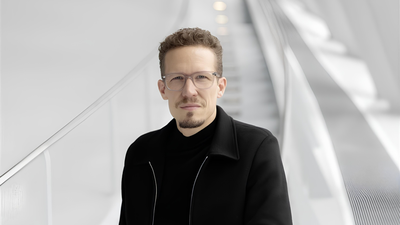
Mumbai: Mercedes-Benz’s Member of the Board of Management, Sales & Customer Experience., Mathias Geisen, was in India this week for the launch of the new S-Class – a plug-in hybrid. Against this backdrop, Gielsen spoke about Mercedes-Benz’s global sales performance, the transition to electric mobility, and the company’s strategy for India, one of its fastest-growing luxury markets.Q: Your global sales were down last year. What is the reason for that?A: We need to break this down. Last year, we sold around 1.8 million vehicles. While this was lower than the previous year, the decline was largely driven by China, where the share of electric vehicles is rising rapidly. Excluding China, our sales actually grew by about 5%.We saw significant volume declines in China and the United States, while other markets remained relatively stable. Competition in China is particularly intense. At the same time, last year—and even more so this year—is a transition period for us. We are phasing out older models and will launch more than 40 new models by the end of next year, which has also weighed on sales.Overall, we remain confident. We had a strong first quarter this year, and our new products are gaining traction. In Europe, for example, sales were up about 7%. Sales of new battery electric vehicles rose 34%, and order intake—more importantly—nearly doubled, showing strong demand. This momentum is being driven by models such as the CLA, which was named Car of the Year 2026. The GLC is performing so well that it is sold out until the end of the year. We are seeing similar traction with the newly launched S-Class.We are confident about building global momentum. The share of electric vehicles in China continues to rise, and many of our new EVs are being launched this year. The electric GLC, for instance, was not available last year, and the CLA is a new launch after being phased out. Updated versions of the GLA and GLB will also arrive this year, reflecting a step-by-step phase-out of older models toward the end of their lifecycle.In addition to regional factors, there are portfolio effects. Many of these models are also available with combustion engines, but they are currently seeing the strongest traction in Europe. We expect this trend to extend to other markets and remain optimistic about sustaining momentum in the years ahead. Q: Dealers earn a lot from servicing combustion engines. How do you handle the conflict between selling ICE cars and transitioning to EVs?A: We don’t see much conflict with dealers. We have a very good relationship with them, and we all agree that the future will be electric. What we don’t know exactly is when, because that differs from market to market. There is a clear understanding that we need to offer different powertrains for our customers. In the long term, the trend will be toward electric mobility. We are not focusing on just one powertrain. Going forward, products will be available with the same iconic Mercedes-Benz design, regardless of the powertrain. This gives us strategic flexibility globally to offer the right product depending on market needs. Q: Out of the 40 new products, how many will be launched in India?A:Most of them will make their way to India, depending on relevance. Today, we have close to 20 products in India, and 11 are already produced locally. We won’t give a number for the future, but we definitely intend to invest further in the market. India is now for the first time among Mercedes-Benz’s Top 15 markets globally. Globally, India already is in top 5 for the Mercedes- Maybach ultra-luxury brand. Q: With the free trade agreement, how will things change? Will there be more local manufacturing or more imports?A: First, we are very happy that we started investing in India more than 30 years ago, when we set up our factory here. For the last 11 years, we have been the market leader in the luxury segment. We always say investing in India is not a sprint—it’s a marathon. We are proud to have led this marathon for 11 years, and we intend to continue. Like any marathon, there may be ups and downs, but the direction is clear. If opportunities arise from the free trade agreement or other developments, we will pursue them. We believe this market has huge growth potential. Out of a market of 4.2–4.3 million vehicles, only about 50,000 are luxury vehicles. Out of those, we sell around 20,000. That shows the scale of opportunity. With rising incomes, increasing wealth, and younger customers entering the luxury segment, we see strong demand for our brand and clear potential to grow further. Q: Why is Mercedes penetration among millionaires lower in countries like India, compared to China, Germany, or Japan?A: That depends on market specifics and product offerings. I wouldn’t say there is a fixed pattern. In very mature markets, customers have a wider range of luxury options, which increases the overall base. But loyalty among our top-end customers is very high. That is why we invest at both ends of the portfolio—entry models to attract customers early in their careers, and high-end models to retain them. Globally, 15% of our sales come from top-end vehicles. In India, it is about 25%. To expand this, we are strengthening offerings like the S-Class, GLS, and future models like the VLS Grand Limousine. We don’t build vehicles for specific income brackets. We have a portfolio of more than 40 models across segments, developed over decades to meet different use cases. All are positioned as premium products. At the top end, such as Maybach, it is reasonable to assume buyers are very wealthy. But we don’t design vehicles specifically for “millionaires.” We design them based on customer needs—sports cars, luxury limousines, and so on—and customers choose accordingly. Q: Is the definition of luxury changing, with people investing more in other assets?A: If I look at our numbers, I don’t see that trend. Our top-end share increased from 11% in 2019 to 15% in 2025, and we expect it to grow further. So we don’t see declining interest in high-end cars. Luxury itself is hard to define. Our approach is simple—we aim to build the most desirable product in every segment. What that looks like differs between an S-Class and a CLA, but the ambition is the same. Q: Is luxury now more about technology—EVs, autonomous driving, infotainment?A: In India, EV share is around 8–10%, but in the top-end segment it is about 20%. That shows strong interest among premium customers. Interest in technologies like autonomous driving, large screens, and infotainment is growing—especially in markets like China and India, where customers are younger. We factor this into product development. Q: What investments are you making on the software side? Any acquisitions?A: We were the first traditional OEM to launch an in-house operating system, which is the foundation of everything we do. This allows us to integrate technologies like ChatGPT and Gemini and collaborate with partners. For example, we work with Nvidia for autonomous driving in Europe and the US—not just for chips but also functionality. In China, we work with Momenta. Our own software architecture gives us flexibility to choose the right partners and applications, which is a major advantage.Q: What about your partnership with Geely?A: We have a joint venture with Geely for the Smart brand in Europe. Beyond that, there are collaborations on specific components, but it is not a full product development partnership. Q: What role will your India R&D centre (MBRDI) play, especially in autonomous vehicles?A: We already do a lot of work in India, especially in software, but also in other components. However, our R&D is globally integrated. We bring together teams with the right expertise from different regions to work on projects, rather than assigning work based on geography. Q: The Adani Group is talking about bringing Formula One back to India. Would that benefit Mercedes?A: I’m not aware of the specifics, but we are big fans of Formula One and have been involved for many years. We have been very successful. I would love to see Formula One in India. At the moment, everyone can see that Mercedes-Benz builds very fast Formula One cars. We have a long motorsport history, including the Silver Arrows. We won eight consecutive world championships, then faced some challenges, but with new regulations we are in good shape—with strong drivers, cars, and team. Q: What is your view on ethanol blending in India?A: It is difficult to comment in detail. But with our technologies—combustion engines, plug-in hybrids like the S-Class, and battery electric vehicles—we are well prepared. All current cars are E20-compliant as per norms. Biofuels are also a topic globally. We had similar discussions in Europe when it was introduced. Initially there were concerns, but over time it became normal and cars adapted without issues. Q: Which is your most challenging market as a sales head?A: The entire automotive industry is in a challenging situation. On one hand, there is a major technology transformation, which we are addressing with new products. On the other hand, there are geopolitical challenges—wars, trade tensions, and broader uncertainties. These affect all global markets and make operating a global company more complex.